
IDEAS WORTH SHARING
Like what you're reading? Sign up for our Shared iDiz email list
to get new ideas delivered to your inbox.
In Case You Missed It – 4.17.24
Emotionally-intelligent email. The value of negative feedback. Blue-collar Gen-Z. Free Fin-Ed content. How to describe your job, and some friendly advice about your eX. Here’s what we noticed, in case you missed it: Emotional Intelligence… in Email? You know how you just delete some promotional emails without even reading them? I recently got an email…
It’s hard not to get caught up in a buzz that surrounds you.
The 2024 total solar eclipse happens Monday, and my hometown happens to be in the right place to see it all. It’s a big deal around here. Supposedly a “once-in-a-lifetime” experience* that we’ve been hearing about for the last few months now. Since this week was my turn to write a post for Shared iDiz,…
CU Numbers Need Marketing Love, Too
Quick, what’s your CU’s current Net Worth/Total Assets ratio? How about Total Loans/Total Shares? What percentage of your members are borrowers? How do these compare to other CUs like yours? Where do you even find these numbers? Now go deeper… WHY are these numbers what they are? Where does your CEO want them to go?…
How do you get new members to Google you?
Note: this post isn’t going to be about the “secrets” of SEO (although that probably would make a good topic for another post.) We aren’t going to spend time talking about keywords, inside and outside links, etc. It also isn’t going to be a post about what might be wrong with your website. This post…
In Case You Missed It – 3.20.24
We’re here with some FRESH takes from this week’s marketing conference! It literally just ended! We have insights about Financial education, marketing with data, using AI, setting a good marketing pace, junk fees and a surprisingly large fruit. Here’s what we noticed, in case you missed it: Junk fees are no joke The Biden administration…
3 big money questions from a new father
2024 has already been a crazy year, or maybe that’s just because I’ve spent most of it as a brand-new, first-time-ever Dad. Yes, parenthood is wonderful, watching my daughter grow and change is breathtaking, and I really, REALLY miss getting a full night of sleep. But this article isn’t about that. Instead of talking about…
Turn your staff into an Idea Factory.
Your credit union’s biggest assets are not on the books, but in the heads of the people who work there. Their experience has given them very specific insights, that when combined with some creative thinking become invaluable to your credit union’s future. So how do you turn those assets into something tangible? Turn your staff…
In Case You Missed It – 2.21.24
FAFSA fumbles, understanding the unbanked, paying for priority privilege, pricy pet ownership, astonishing AI advancements, and auto prices are almost normal. No one has time to catch all the news, so here’s what we’ve seen lately, in case you missed it: FAFSA frustrations flummox families For millions of college-bound students, filling out the FAFSA is…
Will it blend? The only CU fintech question that matters.
Quick, go search for something on your site. Now check online banking. Try opening an account. Set an appointment. Pay a bill. Ask the chatbot a question. Now apply for a loan. Take a look at the last few emails you got from your credit union. Do these systems all look and feel and function…

Move with the future or get left behind
My job has had a learning curve since Day 1, and I hope it continues. Because I’d rather move with the future than get left behind. It has been a powerful evolution I’ve been a graphic designer for over 40 years. My profession has transformed from markers, drafting tables and T-squares all the way up…
In Case You Missed It – 1.24.24
Boomers and booms, brands that x-ed out, a different type of Visa, and why you might be able to afford your very own influencer after all. Oh, and a tiny bit of bragging on our part. Here’s what we’ve seen lately, in case you missed it: Congrats, it’s a bouncing baby website! We don’t usually…
Solving the CU marketing “now what?” problem
“Now that we have this spiffy new software/system/service/device, our troubles are over! With the click of a mouse, I’m a one-person data-driven automated digital marketing powerhouse. Let’s make it rain, baby!” Click… “Upload Content?” Now what? Sound familiar? This is what I call the “now what” problem. We all know that digital transformation, digital marketing,…

Four ways CU marketers can kick-start 2024
The holidays are finally behind us, and so it’s time for credit union marketers to relax and settle right back into that comfortable post-holiday routine, right? Well… sort of. Here’s how to kick off the new year in style – and make sure you get a head start on blowing those 2024 project goals out…

In Case You Missed It (v36)
We’re putting the personal in personal loans. We’re looking into the financial future. We’ve got a possible DLT credit union, the straight dope about Tech and all the stats on 2023. While you’re home for the holidays, we’re… also home for the holidays. Here’s what we’ve noticed, in case you missed it: The American Zeitgeist…

24 Tips for Monster Results in 2024 (Part 2)
The holidays are incredibly close, and many of us are finding out we just don’t have enough time! Me included, but I made you a promise last week and I plan to keep it. So, amidst the flurry of activity that everyone is dealing with this week, I bring you the second half of iDiz,…

24 Tips for Monster Results in 2024 (Part 1)
The holidays are almost upon us and if you’re like me, you don’t have time to write – I mean, uh, READ a long think-piece article today. You just want to work on your end-of-year projects between intense online gift-shopping sessions. Or maybe the other way around. Well worry not! I’m here to provide you…
5 short, sweet ways to avoid CommitteeThink
The rationale for allowing committees to make big decisions sounds good – a small group of stakeholders with diverse backgrounds combine their experiences to solve a problem as a team, efficiently and quickly, in order to benefit the most people. So why doesn’t it seem to work that way? Why do some people see committees…
Real SEO for credit union websites starts with real people
Search Engine Optimization (SEO) is one of the most mysterious and misunderstood terms in the world of credit union websites. The standard “SEO tactics” that might work for sites selling shoes or smoothie recipes (stuff like excessive repetition, rephrasing, padding, keyword stuffing, title and meta tag blather, even more repetition, etc.) will probably just annoy…

Help us pick the biggest turkey
Hey, it’s a holiday week, so we decided to focus on the one thing that everyone seems to be worried about. How big of a turkey do you really need, and which of these are the biggest? Leave a comment to vote on your favorite! Is over-optimized SEO the biggest turkey? There’s something ironic about…
How to make your credit union’s Board of Directors cool
We’ve seen a lot of conversation in the past few years about the member aging problem and its impact on the future of the credit union movement. Yes, it’s undeniably an obstacle, but more than a few credit unions could benefit from examining themselves, particularly the Board of Directors, along with their membership. To put…

Why are our Board Members so Old?
Now that I’m on two Boards, I finally understand why there is so much gray hair on so many Board Member’s heads. They’re old. Like me. Not that gray hair is a negative. Because of my Dad’s mostly shiny dome, I’m just happy to have some hair up there, regardless of color. And there are…
Candid Conference Conversations
In the last month, I’ve been to two state credit union league conferences (the Virginia CU League‘s Growth Conference, and the Indiana CU League‘s Convention right here in Indianapolis). Wondering what’s on the minds of CU leaders right now? Fresh from the schmooze-a-thons, here’s a quick recap of some of the problems and solutions we…
In Case You Missed It – 10.25.23
There are credit union monsters running amok! Monstrous mortgage payments, brainless budgeting, dreadful data sharing, hairy hacks and scary scams. For all things creepy, kooky, mysterious and spooky, here’s what we noticed, in case you missed it: We’re Haunting the ICUL convention this week! Stop by our booth at the Indiana Credit Union League’s Annual…
The creepy side of web-crawling critters
‘Tis the season to be spooky, but don’t worry, this article doesn’t contain any actual spiders. Sorry to any arachnophile readers that got their hopes up. Big data is a monumental and plentiful resource to be found among the mountains of the Internet, and there’s plenty of gold in them there hills if you’ve got…

How to break out of a loan rut
Deposits may be hot right now, but loans are still the primary income generators, not to mention membership and asset grow-ers, for credit unions. Plus, loans are a chance to be a part of your members’ significant life events. So loans are still worth talking about. Unfortunately, credit unions have mostly been marketing the same…
How credit unions fit into the digital marketplace
Most credit unions have a heartwarming story about putting cash into the communal cigar box. That mental image is great, and it resonates with people who want to be community-focused. But how many people under the age of 35 remember the last time they paid for something with cash? We’re living in a world where finance…
In Case You Missed It (v34)
The power of local, how to use AI, the state of the Metaverse, getting samples of space rocks, fluctuating gravity and most unbelievable of all, annual reports can actually be interesting. Here’s what we noticed, in case you missed it: The extraordinary advantage of local In this article on the value of local institutions (financial…
Why credit union websites must be flexy and stretchy
When it’s time to build a new website for your credit union, what are you looking for? The longest list of features? An all-in-one, all-singing, all-dancing set of solutions to all your problems forever? Set it and forget it? Write a check and walk away? Or are you looking for a long-term relationship, a basis…
Why you need fewer members who look like me
The median age in the US is 38.5. The average age of a credit union member is 53. That’s already a big gap. But when you realize that 68% of their “most loyal” CU members are older than 65, suddenly that age gap feels even bigger. (No wonder so many credit unions are beginning to…
3 steps to change what people say about your CU
We know credit unions to be helpful, community-oriented and compassionate. We know they keep their members’ financial interests close to their hearts. But what do people really say about your CU? A lot of people (and I mean A LOT) have largely experienced financial services as punishment, as trauma. And they feel this way for the…
In Case You Missed It (v33)
In this edition, we take a look at showing off your real values, the way real-world costs are rising, some big moves from NCUA, a fancier ChatGPT, the current state of remote work, and more. Here’s what we noticed, in case you missed it. Lip service vs. real values Chip Filson’s “Just a Member” blog…
Five ways you’re losing deposits
After years in the basement, loan and deposit rates have been rising for a while, and at many credit unions, the deposit pendulum has swung from “Yikes! Deposits are spiking! We need to make loans!” to “Eek, we need deposits!” again. To help you tune up your deposit-fu, here are five ways you might be…
How to decide when to stop or push ahead
Marketing is an inexact process that sometimes takes a long time to pay dividends. Which might be why so many CFOs aren’t sure it’s worth the cost. Numbers People usually prefer to track a quick return on a specific investment, with digits they can show on a spreadsheet. But marketing isn’t accounting. That’s not to…

How to get started with Google Ads
Google offers you some excellent tools for tracking your site traffic and bidding on keywords. But let’s be honest, these interfaces aren’t the most user-friendly. In fact, at first glance they can be overwhelming and incomprehensible. The good news is you don’t have to be a tech guru to get started. Trust me, I’ve helped…
In Case You Missed It (v32)
BIG NEWS in the credit union world! Plus, 4-day work weeks, a call for transparency, Student Loan confusion, Apple Pay Later, and the Erie Canal. We’ve got something to say about all of these, and more. Here’s what we noticed, in case you missed it: Remember the 4-day work week? Surprise, surprise, it seems like…
Fixing the Top Five Accessibility Mistakes on Social Media
Sure, your website has great Accessibility, and you check up on it regularly to keep your site up to snuff. But what about the rest of your online presence? The bad news is, a lot of credit unions aren’t paying attention to Accessibility on Social Media, and routinely post content that a significant portion of…
Making content to attract younger members
Whenever the question of how to reach new, young members comes up, you’ll see recommendations like, “Make relevant, valuable and authentic content that displays your values,” and you have to wonder what the writer thinks it actually means. Now, this is actually good advice, but it can feel incredibly generic. I know this because I’m…

Enduring brands: What we can learn from Barbie
Get ready to see bubblegum pink everywhere you look this Summer! Margot Robbie is starring in a new live action Barbie movie, and Mattel has already signed licensing deals with over 100 brands. Not only can you dress like her, but you can also dress your dog to match (courtesy of Gap.) You can wear…
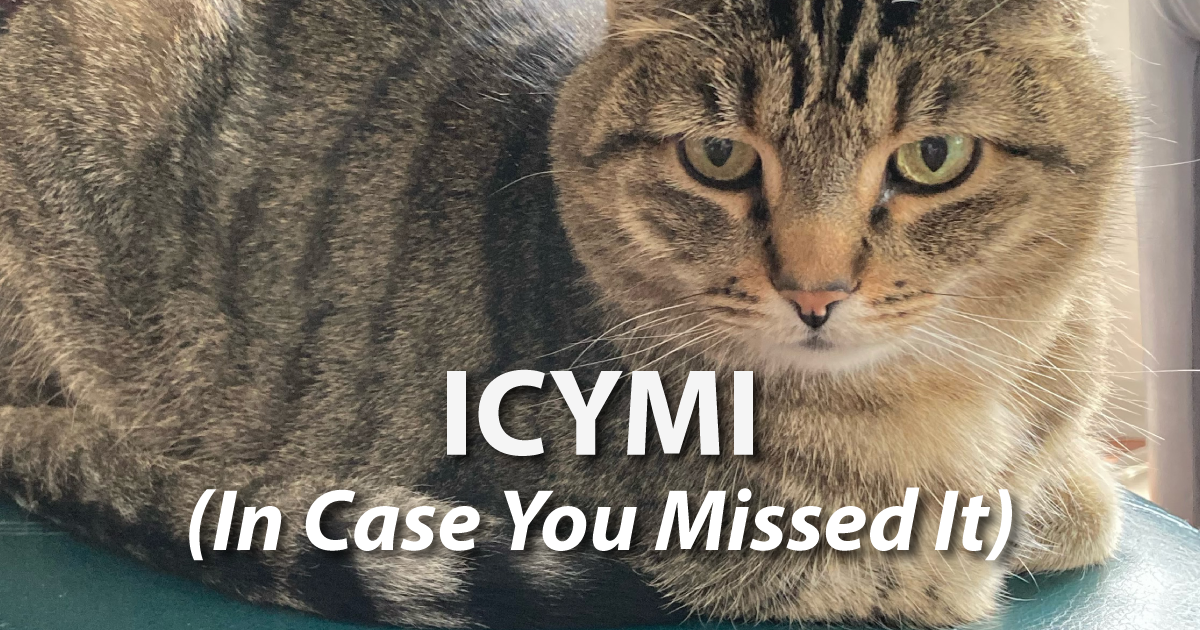
In Case You Missed It (v31)
What do rising interest rates have to do with Marketing? Is Pride only a June thing? Are you helping your members with student loans? Is getting advice from social media ever a good idea? Oh, and we hired a cat. Here’s what we noticed, in case you missed it: Welcoming the newest iDiz staff member!…
“Meatspace” is a CU superpower
Over the last few months, I’ve been to several in-person events, both professionally and personally. There really is nothing like being in real live “meatspace” with other real live humans when you want to connect, learn, innovate, and just plain have fun. Of course, you can also form real connections and have real, human-to-human experiences…
Is AI a good fit for credit union marketing?
AI (and AI marketing) is the brand-spanking-new tool that everyone seems to be excited about. If the internet is to be believed, it’s either a miraculous new tool that will save corporations BIG $$$, the end of artistic integrity and creativity as we know it, or both. But that’s kind of par for the course…
In Case You Missed It (v30)
CU numbers, a social media post idea, Gmail tricks, EDDM options, ancient tweezers, and who knew pickleball was so noisy? Here’s what we noticed, in case you missed it: New Age Direct Mail Sure, email, websites, social media, video, and all the rest are getting most of the attention these days, but good old direct…
CU Conference Shout-Outs
The “sixth principle” of credit unions is cooperation among cooperatives. And we feel a similar spirit should apply to those of us who serve the credit union movement. Here are just a few quick shout-outs to just a few of the innovative companies and CUSOs we’ve seen at NACUSO in Las Vegas in April, and…

Nurture young leaders to get more young credit union members
One of the most common long-term strategic challenges facing credit unions is the member aging monster. It’s a topic we’ve covered quite a bit right here in this very blog. Of course, there’s no one magic bullet for attracting and retaining younger members, but there are a lot of possible ways to give younger members…
In Case You Missed It (v29)
Misinformation and bots are everywhere, but at least there’s one baseball team with a lot of heart. Should you hop on the AI train, or wait until it’s a smoother ride? Who actually gets the tip when you order out? Here’s what we noticed, in case you missed it: Join the fight against misinformation Students…

3 superpowers of the Friendly Neighborhood Credit Union
When you think of ‘credit unions’, you might not immediately think of ‘superheroes.’ It might be difficult to imagine a superhero that would convincingly represent something like a credit union. People tend to be interested in superheroes that defeat supervillains and repel alien invasions, not ones that save people from high interest rates. But why…
Why are you hiding your true talents?
You know you are pretty amazing at some things. But you also know you are not amazing at every thing. And when you try to do everything, not all of it matches the quality of the things you are amazing at. Rest assured that you aren’t the only one like that. We all have our…
Strategic inspiration to help credit unions mix things up
Have you heard the saying about doing the same thing over and over and expecting different results? There’s a lot of power in good branding, authentic messaging and a creative loan campaign, but sometimes you should be looking elsewhere for inspiration. You might be surprised at how many fresh new ideas you can find when…

The big value in small credit unions
Here’s my bold prediction for the near future: small and de novo (new) credit unions will play a key part in revitalizing and re-energizing the entire credit union movement. Small credit unions (or call them “boutique” or “specialty” credit unions if you prefer) obviously have tremendous value to their members. But we’re only just beginning…
In Case You Missed It – NACUSO 2023
CUSOs are becoming more and more important to the credit union industry because they focus on solving specific problems. Which is basically what iDiz does. So we headed to Las Vegas for the 2023 NACUSO Network (why does every conference end up in Vegas, anyway?), and here’s what we think you might be interested in,…
3 ways to earn your members’ trust
There’s an old saying, “May you live in interesting times,” which supposedly refers back to an old curse. If you’ve not heard of it before, the gist is that it’s better to live in a “boring” time of peace and prosperity instead of an “interesting” time of conflict and change. And when it comes to…
In Case You Missed It (v28)
Step right up ladies and gentlemen, CUs of all sizes! We’ve got all sorts of wacky and wonderful things here today! For starters there’s an honest-to-goodness brand-new credit union getting started. The CU-world-famous Chip Filson gives his take on recent bank failures. Is artificial intelligence your new CEO? Can you get your paycheck before it’s…

New CU tech needs Marketing love, too
Woohoo! Your shiny brand-new website, online banking, mobile banking app, P2P payments platform, fribbert cromulator, or all the above is ready to rock! All your need to do is shut down the old one, flip a few switches here and there, and your members will love it! They’ll flock to download the apps, and no…

Work with me here.
A few years ago I got involved with a local non-profit, because they pulled together and did something positive and real for the community, instead of just talking about it. They bought land in midtown Indy and built a park – complete with a playground, picnic shelter, and baseball field. It’s not a huge park,…

Is AI going to steal my job?
According to the internet, ChatGPT is the newest hot-topic artificial intelligence that’s apparently going to steal my job and take over the world! ARGH! I wanted to know more about this scourge upon humanity, so I turned to every millennial’s secret work weapon: Looking it up on Google. Despite the doomsayers, ChatGPT is just a…
In Case You Missed It (v27)
What do Super Bowl ads have to do with 40K menus? Does it matter what you do on LinkedIn? Looking for generational FinEd content? You want it, we’ve got it. Here’s what we noticed, in case you missed it. Six things to stop doing on LinkedIn This is a wonderfully direct discussion of some of…

Why love needs CU marketing love, too.
When you think about it, credit unions and the whole credit union movement are pure love in action. I’m serious. Sure, the eight cooperative principles use fancier language, but when you get down to it, these core principles of the credit union movement are all just practical ways humans make the world a better place…
How to hire marketers that get-stuff-done
You aren’t the only one having problems finding people with the right skills to fill open positions. Especially when you are trying to hire a marketing person. Which makes it even more frustrating when, for every new hire you finally land, someone else decides to leave. It feels like a never-ending battle to get-positions-filled in…
3 ways to get BIG results from your tiny social media budget
It seems like budget is the Achilles’ heel of social media managers, regardless of industry. In my experience, this is equally true at credit unions. The reality is that your social media budget has to compete with the rest of your marketing goals, and might get ignored as a result. The good news is that…
Cruft check: fast, easy credit union website cleanup
Hey, I get it; housekeeping is hard. But it’s still an important part of keeping your credit union’s website running smoothly. Every so often, it’s worth taking a few minutes to clean up link rot, scrub that scruffy, crusty old content, and throw out last year’s leftover rates. Here’s our easy, fun checklist to get…
In case you missed it (v26)
Want to see how Gen Z-ers become CMOs? Or the update on Open Banking Standard? What about EV loans that aren’t just for cars, how to start your second career in PR, or how CU’s can be a financial side-piece? You want it, we’ve got it. Here’s what we noticed, in case you missed it.…
5 ways to get better social media results next year
We all know the way social media goes. In January you pull out your brand new social media strategy, you know, the one you were so excited to implement. You’re certain that this is the year… Then it’s suddenly April, and things have gotten so busy. As the year goes on, you tend to fall back…
In case you missed it (v25)
What in the world is a “Fractional CMO?” Are you following the Sixth Principle? Do we all need to get back to the office? Is it 1969 again? Everything from mapping boneyards to unusual job descriptions, here’s what we noticed, in case you missed it: The “Fractional CMO” Search Story There’s an interesting turn of…
Five things CU marketers can get done before 2023
2023 is right around the corner! Everyone’s putting down their hot chocolate and getting out of the holiday mood, and so it’s time for credit union marketers to relax a bit, right? Well… sort of. With just a little time and effort before we hit January whirlwind, you can get a fresh start on 2023,…

Have you thanked your website lately?
Right around Thanksgiving there’s a lot of talk about what people are thankful for. The old standbys like Love, Family and Good Fortune are all well and good, but there’s something that a lot of credit union marketers might have forgotten to show their appreciation for. What I mean is, your website does a lot…
You deserve a promotion, not more work.
Marketers at credit unions have always been asked to handle a lot of different things at once. Sometimes they’ve been asked to do more than one job. It kind of comes with the territory. Especially at smaller CUs. But that doesn’t make it a good idea. To keep piling on responsibilities, regardless of someone’s strengths,…
In case you missed it (v24)
This week, we’re pondering whether “unbanked” is out, feeling wary about Twitter, wondering why interchange legislation keeps coming back, finding tranquility, riding golf carts, and going green. Here’s what we noticed, in case you missed it: Time to ditch the whole “unbanked” and “underbanked” idea? Yes. This article on Financial Brand lays out the details…
Five ways credit unions can get the most out of Google Analytics
Any way you slice it, Google Analytics is a huge, confusing beast. The price ($0.00) is certainly right, and it’s an amazing resource, but Analytics can also be pretty bewildering, with lots of dead ends, rabbit holes, and red herrings galore. Plus, all the advice you find online is oriented toward websites selling shoes, games,…

5 tips to make video content your members will vibe with
Being in the marketing department means you know how to do video content, right? I mean, those kids on TikTok do it, so how hard can it be? Well, it’s true that it’s easier than ever to make content. But having access doesn’t necessarily mean it’s easy. Those TikTok content creators? They make these little…
In case you missed it (v23)
This installment of ICYMI is staying mobile, looking into the future, heating up, assessing risks and changing the world. Oh, and a little birdwatching along the way. Here’s what we noticed, in case you missed it: Mobile branches are the future I’ve been a big fan of mobile branches for a long time. I was…
Five ways you’re scaring members away
Gather ‘round the campfire folks, pour your favorite pumpkin-flavored beverage, and get ready for five spine-tingling cautionary tales of ways credit unions might be making members go “EEK!” and run away. Do you have what it takes to face the horrors ahead? Come closer, closer, and hear our tales of dread… The Website of Fright…

What good is a marketing budget that never changes?
It’s budget season once again. Time to dust off last year’s marketing budget, tweak the product promotions to match what lending wants to focus on this year, push the numbers as much as you think you can get away with, turn it in and hope that it doesn’t get trimmed too far back. Sound about…
In Case You Missed It (v22)
Calling out crypto clumsiness. An anxiety-inducing accounting of ants. Necessarily nuanced nudging. A realistic range of representation. The sale and safeguarding of Stonehenge. Vader’s voice virtualized. Here’s what we noticed, in case you missed it: Calling out the elephants in the crypto room… Even for the most dedicated fan of cryptocurrencies, there are some enormous…
Let’s get unapologetically, radically transparent
No, I don’t mean transparent as in “invisible” or “see-through,” and I certainly don’t mean “difficult-to-find.” The word transparency could refer to a lot of things inside a credit union, but for our purposes we just have to ask one question: Do people know how a credit union works? We know that people see “credit…
Five tips for credit union deposit marketing
Things are, well, pretty wacky out there in the US and world economy. Loan growth has been strong this year, surprisingly strong, and at many credit unions loans are starting to outgrow deposits for the first time in a few years. And so now, with inflation, general uncertainty, and rising rates on people’s minds, some credit unions are…
Is it time for Credit Unions to go Virtual?
The labor market has had 20 consecutive months of sustained job growth. The unemployment rate has been hovering around a 50-year low. It’s really no wonder that employers are having to boost hourly and salaried pay just to compete for workers. Credit unions are in the same boat. It’s harder-than-ever to find new, qualified personnel.…
In Case You Missed It (v21)
We’ve got student loans and a new breed of scam. Millions of disease-fighting mosquitoes. A cost-of-living comparison, the rise of mobile banking and a whole lot of real-life experience. What’s on your bingo card? Here’s what we noticed, in case you missed it: The great Student Loan debate By now you probably have heard that…

We need Financial Education for those not-so-happy times
When members come to your credit union for a mortgage or a car loan, it often feels amazing. Helping someone start a retirement account feels smart and safe. But there are a lot of life events that don’t give us those warm-fuzzies. If you spend any time on the r/personalfinance subreddit, you’ll see a lot…
What credit unions can do when the aliens land
Let’s face it – “disaster planning” is kind of, well, depressing. The last few decades have been a little too full of “once in a lifetime” events. So how can a CU marketer stay flexible, stay loose, and plan for the unplanned? Aliens, that’s how. No, seriously. Aliens. Bear with me — there are some…

Do you have website blindness?
Is your website actually usable, or are you just used to it? If you’re working with your website frequently or even daily, you might feel like your website is truly, actually user-friendly. But the problem is, you’re too close to it. You might have website blindness. It’s easy for you to navigate a website when…
In Case You Missed It (v20)
We’ve got free student loan financial education. Checking account sign-on bribes are a bust. Starbucks supports Deaf-REACH. Webb and Hubble compare telescope sizes. Big brands are creating RBG IPs. And that’s not all. Here’s what we noticed, in case you missed it: Student Loan Sense videos launched, free for CUs! We’re incredibly proud of this…
How credit unions can be much more than loan retailers
Lots of people make bad decisions about their money simply because they were never taught how to make good ones. Which often gets blamed on their parents, since 83% of US adults say that parents are the most responsible for teaching their kids about finances. Yet 40% of parents claim they talk to their kids…
Compliance needs marketing love, too
Wait, isn’t that weird? Aren’t Compliance Officers the credit union marketing buzzkills? I mean, every time we come up with a brilliant marketing idea, those mean ol’ meanies want to cover it in fine print, or just take all the fun out of it. Aren’t we natural enemies? Well, no. Here’s why Compliance and Marketing…
3 questions to help you maximize your social media marketing
A lot of people are treating social media marketing exactly like every other type of marketing. They think that if they put an ad on a social media platform, people will just show up. “If you build it, they will come” and all that. But you’re not Kevin Costner, and this ain’t your granny’s marketing.…
In Case You Missed It (Vol 19)
GA4 deadline, crypto crisis, risk management, e-bike deliveries, Mars samples, Nerf rockets, CU opportunities. We didn’t start the fire…. Here’s what we noticed, in case you missed it: NCUA Streamlining Underserved Area application process One of the best solutions for solving the “banking desert” problem is credit unions that expand their fields of membership with…
Make your CU website pay: getting to know your members
Your credit union’s website isn’t just a glowing brochure; it should be the hub of your marketing, an engine for growth, and a no-brainer investment, that makes a big difference in the bottom line. But how do you actually make that happen? This is the first post in a “Make your CU website pay” series…
Huge credit union opportunities in the news
Here’s a recap of a few recent news stories that also set off that little light in my brain labeled “You know, credit unions have opportunities to really think big here”. Closing the Black homeownership gap Ponder a statistic from this article from SWBC: “In 2021, Black homeownership rates were at 44%, while 74% of…
Don’t be like an airline
You might not think that an airline has a lot in common with a credit union. But when you think about it, people come to both airlines and CUs because they want to do something else. No one I know rides commercial airlines or takes out loans because they enjoy doing those things. Both airlines…
In Case You Missed It (Vol 18)
Get out your Buzzword Bingo cards! This week we’ve got “green”, “FinEd”, “pizza”, “crypto”, “carbon”, “Lego”, “Pride”, and, uh, “glue”. Here’s what we’ve noticed, in case you missed it: Considering Green Loans? The time could be now Reuters recently reported the President will announce new executive actions to increase the production of solar panels and…
Mission is your credit union’s not-so-secret weapon
“Why are you here?” It’s a small question. And it’s a big question, too – the biggest, really. The answer, and more importantly the truth of that answer, will determine whether a credit union thrives and survives. “No, why are you really here?” We’re not talking about a slogan, a tag line, or the boring,…
Legends don’t just happen, they’re built.
Despite its name, New College (part of Oxford University) isn’t exactly new, having been built in the late 1300s. And with that kind of history, it isn’t surprising that even some of its buildings have their own stories and legends. Take the New College dining hall, known for the enormous oak beams that span across…

Your Granny’s on TikTok. Oh my!
When TikTok got started, it was generally a kid’s platform. It was the home of lip-syncing, dancing, and general antics. As a result, most of its user base was in the under 20 demographic. Fast forward to 2022, and things have changed. Pew Research Center’s survey of adults from 2012-to 2021 showed that 40% of the…
In Case You Missed It (Vol 17)
True facts you won’t believe. Great ideas and voltage drops. Provocative lip balms, why we need small CUs, and a disgusting political party quiz. Here are the items that caught our eye, in case you missed it: Powering through the “voltage drop” when you have a great idea I subscribe to Behavioral Scientist, and you…

A second look at CU science fiction
Many years ago we wrote a post called “Credit Union Science Fiction” as an attempt at looking into the future. It was a fun, funky mental exercise that let us flex those precognitive muscles a little bit. After all, making predictions and planning for the future is an important part of every marketing strategy. We…

What GA4 means to CUs
If you deal with your credit union’s website Analytics, you’ve probably heard some buzz about Google Analytics 4, known as “GA4” by all the cool kids. GA4 is certainly an improvement over the older versions of Google Analytics in many ways, but it is very different. Here are some of the things credit unions need…
Finally, a little clarity on credit union website Accessibility and ADA compliance
The US Department of Justice (DOJ) recently released their guidance on how the Americans with Disabilities Act (ADA) applies to websites. Despite thousands of lawsuits from ADA trolls, the issue muddled along for years without “official” clarification on the actual rules of the road. This article from NAFCU’s Compliance Blog is a great summary of…
In Case You Missed It (Vol 16)
Why you should look into becoming a Juntos Avanzamos CU. How Fortnite and an author are raising millions. How you really need to use that NCUA logo, and why I now want to earn my black belt in Verbal Aikido. Here are the items that caught our eye, in case you missed it: Does your…
Five Ways You’re Losing Car Loans
I don’t need a crystal ball to predict that your credit union needs to make more loans. And of course that means good ol’ auto loans, mostly used car loans. Free of charge, we’ll share five things you’re probably doing wrong with your car loan products, your member experience, and your auto loan marketing (just…

Hey CUs, young people need your help
I’ve written at length about how credit unions can get noticed by Millennials. But sometimes it feels like people forget how time just keeps passing us by. Not to make anyone feel old, but as of 2022 millennials are now between the ages of 26 and 41. This means the vast majority of college grads…
Monster Problem: How can I get more out of my Marketing Department?
Regardless of the credit union’s size, someone always seems to be asking this question. This is often because Marketing is too-often seen as an expense rather than an investment, and numbers people tend to worry about costs more than growth. But that doesn’t mean the question isn’t worth asking. So how do you get more…
In Case You Missed It (v15)
Young professionals aren’t the only ones job-hopping more often. Actual proof that marketing actually works. E-Z SEO and cookie-less analytics. Plus a brilliant name for a sperm collection company! Here are the items that caught our eye, in case you missed it: The non-stop job-hop bebop Young professionals are job-hopping at an ever-increasing rate. According…
CUDE training and my credit union adventure
I’m an avid motorcyclist, and like anything involving high level skill, part of the fun is constant improvement. Whether I’m riding the same old seven miles to the office, romping through the curvy roads in southern Indiana and Kentucky, or seeking out the most primitive dirt roads I can find, there’s something to learn from…
Student loans are crucial for making credit unions relevant to young people
Student loans continue to plague our youngest generations. This debt is keeping us from buying cars, buying houses, having kids, and generally moving on with our lives. Need proof? When the U.S. Department of Education offered to freeze student loan payments during the COVID-19 pandemic borrowers collectively agreed wholeheartedly. So much so that more than…
Fun facts for TWOsday
Today is TWOsday, February 22nd 2022 (2-22-22) and that’s the most 2s we’ve had in a date since February 22nd, 1922. There’s only a handful of these dates every century, and two of them happened this month (2-2-22)! We wanted to take a moment to recognize today’s date, because chances are that none of us…
Five marketing automations credit unions should try
Marketing automation can help credit unions find members and improve loan growth. For example, automation can create and manage email campaigns, help you manage member feedback, or target content based on where members are in their personal needs. But how do you find out which tools work best? Do you need to jump right into…
In Case You Missed It (v14)
Why GA4 is worth learning about. What science can teach us about emotional intelligence. Plus plastic that is stronger than steel, and FREE resources! Here are the items that caught our eye, in case you missed it: How a CU can live up to its true purpose “Someone’s financial well-being is as much about how…
3 reasons why your CU should be promoting sustainability
For an unfortunate number of people, sustainability is just another buzzword. Like “Organic” or “Eco-Friendly,” it’s just a bit of hippie dippy hooey that businesses pay lip-service to for PR reasons. In other words, it’s just a Marketing thing. Well I think that attitude is not just sad, but frustrating. It’s outright bogus and not…
Why you should offer Loans for Oddballs
Loan season is right around the corner, i.e., your credit union’s bread and butter. So if you haven’t already started working on your spring and summer auto, boat, home equity and mortgage loan campaigns, then you better get in gear. If you can get excited about one more loan campaign, that is.* I mean, I…
Soft impacts and hard numbers
You’ve probably seen this quote from Maya Angelou: “I’ve learned that people will forget what you said, people will forget what you did, but people will never forget how you made them feel.” Maya Angelou It’s a simple, but powerful truth. And it’s why credit unions at their best pay careful attention to those “soft…
In case you missed it (v13)
Green loans and the potential harm of AI decisions. Faux holidays and the end of the 40-hour work week. Here are the items that caught our eye, in case you missed it: Not Just a Nerd Fight Timnit Gebru is an AI researcher delving into the issue of the harm AI can do to marginalized…
Core conversions need Marketing love, too
Technology moves fast, and credit unions need to move faster. Or at least keep up. If changing or upgrading your core processor is on the table, here’s why Marketing needs to be sitting at that table. Be there from the beginning No one embarks on a core conversion for fun. It’s a monster project, and…
Fresh, never frozen lessons from Wendy’s marketing
Wendy’s digital marketing team has always been impressively in-tune with what the internet likes. They’ve long since become well-known for roasting people on Twitter, and to top it off? They’re actually funny. More recently they’ve launched their “Super Wendy’s World” campaign to target gamers, and with the size of the industry it’s easy to see…

Wishing you a happy holiday with some festive cookie recipes!
We hope you and yours have a well-earned, relaxing holiday weekend, uninterrupted by Marketing Monsters and other stress. To celebrate, we’re sharing some of our favorite cookie recipes to help everyone get into the holiday spirit! Christmas Peanut Butter Cookies From Jon Cooper These cookies have the perfect blend of sweet and salty while also…
How to keep those winter Marketing Monsters from getting ABOMINABLE
During the winter months, it gets really easy to let things slide as you plan for warmer weather. Unfortunately, those Marketing Monsters aren’t waiting until spring comes to cause you problems. In fact, winter is usually when those problem monsters become Abominable. When I say Abominable, I mean big, hairy, and out of control. While…
In Case You Missed It (v12)
An overdue moon reunion, a VISA-less Amazon, a potentially huge new CU, why Bankthink is destroying credit unions, yet more overdraft news, and drones that look alive. Here’s what we’ve seen lately, in case you missed it: It’s been 50 years since we last visited the moon. Back in 1972, Apollo 17 launched from NASA’s…

Five Fun Winter Website Projects for CU Marketers
I’m a dedicated motorcyclist, so winters are the time when I catch up on all the home and garage projects I neglected in warmer weather. As it turns out, I’m out of moto-projects right now. My bikes are all running great, and I organized all my tools and spare parts last winter. So this winter…
Quick wins CUs can get done NOW
There are times when you need a few quick wins. Whether it’s budget season, or there’s another review with your boss and you just need to get some results and look good. Maybe you still haven’t gotten that list of To-Dos done, much less hit all those goals! OMG! It’s okay. Don’t panic. Simply take…

Giving thanks and sharing some Monstrously Munchy Recipes
This week, instead of delivering another deep dive into a new marketing topic, we wanted to come up for air and just say: Thanks. Thank you for being you, for working so hard and for doing your best to make our world a better place. In celebration of the holiday weekend, we’ve included some of…
In case you missed it (v11)
How much time do you waste commuting to work? Did you have “The Money Talk” before you committed to your partner? Do you suffer from Electile Dysfunction? Here’s what we’ve seen lately, in case you missed it: Electile Dysfunction: what we can learn from a political ad done right No, that’s not a typo. It’s…
Why we need to help start more new credit unions
It seems that while we and everyone else in the credit union movement were busy growing existing credit unions, it slowly became incredibly difficult to start a new credit union. At the same time, it has also become easier and far more common for credit unions to disappear via mergers. The stats are staggering: over…
Why good credit union branding is never done
Just like people, every credit union wants to be well-known and popular. They want to portray an image or persona that everyone knows, understands, and likes. Kind of like my brother. When my brother was in high school, he always wanted to be like the “cool kids.” Because the “in-crowd” seemed to have all the…

Get face-to-face with the Financial Education Monster
This pesky pain-in-the-neck likes to sit in the periphery. The Financial Education monster lurks just out of view, a persistent reminder of a mostly unfulfilled promise you made to your members. And even worse, your members can see the scruffy, generic, little rascal, too. Here’s how to brush up the Financial Education Monster, give him…

Wrestling the Member Onboarding Monster
This slippery, sly critter is a regular Houdini. Without constant attention and communication, the Member Onboarding Monster slips overboard the instant your back is turned, taking hundreds of members with him. Here’s how to turn this beastie into your member retention bestie, and transform single-service and indirect members into lifelong super-fans: Automate onboarding This one’s…
Feeding the Social Media Content Beast
It’s always hungry, always screaming for more, MORE MORE! The Social Media Beast craves a constant stream of tasty snack-size content, and it’s insatiable. Here’s how harried credit union marketers can keep this ravenous critter happy while keeping their sanity. Repurpose, recycle, and repeat The first rule of content cookery is to make the most…

GoodiDiz Podcast: Drag Queens, Credit Unions, Inclusion, and Love with Dan Marquez
The GoodiDiz concept is simple. Credit unions do a lot of good in the world — and they’re also a strong and sustainable business model. So we’re exploring the good ideas, both inside and outside the CU world, that can do a lot of good while also being good business. In this episode, I’m talking…
In case you missed it (v10)
The secrets of top designers. What drives millennials and gen-z away. Some really ugly logos. Here’s what we’ve seen recently that you may have missed: Everything is made up (and 29 other designer secrets.) Be a sponge. Emotions matter. Embrace your harshest critics. Everything is made up: “Every language ever spoken…Olympic games…Smart phones…Pizza…Ice cream…Google! Everything…

GoodiDiz Podcast: Financial inclusion and de novo credit unions with Denise Wymore
The GoodiDiz concept is simple. Credit unions do a lot of good in the world — and they’re also a strong and sustainable business model. So we’re exploring the good ideas, both inside and outside the CU world, that can do a lot of good while also being good business. In this episode, I’m talking…
Learn to love your haters
I hate to be the bearer of bad news, but… not everyone is five stars, A++++, bonkers crazy in love with your credit union. No matter how awesome you are, not everyone will agree. But here’s the good news: that’s OK. Really. There’s a lot you can learn from the haters, the not-so-greaters, and the…
In case you missed it (Vol 9)
Mysterious FICO scores, a spam & hacker tools company on Facebook – which is building a new universe – and apparently millennials have attitudes. Go figure. Here’s what we’ve seen recently that you may have missed: FICO Fuss Why FICO Scores are up by Dinny Lechman, has some interesting news detailing why the average FICO…
The best websites are never done
Once your credit union’s spiffy, super-fresh new website goes live, you can raise a toast and cross website stuff off your to-do list for a few years, right? Not so fast. A new website is only fresh for a brief moment in time. The world, your members, and what they want and need are constantly…
In case you missed it (Vol 8)
ICYMI: CUs either merging or buying banks, transparency that builds trust, and ideas you need to borrow. Here’s what we’ve seen recently that you may have missed: According to the media, CUs are crazily merging… So far there have been 74 mergers of CUs in 2021, which if it continues at that pace will break…
To become a CEO, think like a CEO
For most of us there is a process to career success. First we need to establish our footing, then learn the ropes, demonstrate our talents, and gradually move up the corporate ladder until we reach the very top. After all, becoming CEO is the ultimate goal, isn’t it? But only so many people can make…
GoodiDiz: How to get good data to make good decisions
A conversation with Rich Jones on data integrity for credit unions of all sizes We’re kicking off a brand new series of video/audio podcasts with a bang, with our first guest, CU strategy superstar Rich Jones! The GoodiDiz concept is simple. Credit unions do a lot of good in the world — and they’re also…

Bracing yourself for CU budget season
All across the land, credit union marketers are polishing up their crystal balls, sharpening their pencils, and gearing up to face the most fearsome beast of all: next year. Following are a few tips for balancing strategy with resources to get the biggest bang for your members’ hard-earned bucks — and your time and energy.…
In case you missed it (Vol 7)
RTO Mortgages, UPLs, AIO for EVs, and the beginning of the end of NSF fees? ICYMI is our way of sharing “Did you see this?!” news and tidbits, just in case you missed it. (And yes, we do try to spell out the acronyms.) Branches still matter Alaska USA FCU’s new branch is in North…
In Case You Missed It (Vol 6)
Mergers are up. Good guys crashed a non-profit’s website. CUs that are actually serving the underserved and cutting back on NSF fees. ICYMI is our way of sharing the best of those “Did you see this?!” news and tidbits that we usually send to each other, and here’s what we’ve seen lately: A great start…
HR needs marketing and brand love, too.
Obviously your job as a Masterful Marketing Maven and Boffo Brand Boss is to bring in those new members and pump up those loan and deposit numbers. Staffing isn’t anywhere near your wheelhouse, so it’s best to leave all of that up to those Human Resources folks at the other end of the hall –…
In Case You Missed It (Vol 5)
ICYMI is our way of sharing the best of those “Did you see this?!” news and tidbits that we usually send to each other. If you like this kind of thing (or don’t), feel free to let us know or join the conversation. In the meantime, here’s what we’ve seen lately: CEOs are getting younger every year Cross a lemonade…
Boats Aren’t Motorcycles
As a marketer, you can slap an image of a car or a house on your ad for an auto loan or a home loan and most people will get it. But what if you want to offer loans for boats, RVs, ATVs and UTVs, electric bikes, snowmobiles or jet skis? And what do you…
CUSOs need marketing love, too
CUSOs (Credit Union Service Organizations) can be a fantastic way for credit unions and groups of credit unions to better serve members and nonmembers, generate income, collaborate with and serve other credit unions, and meet all sorts of needs. There’s an endless variety of CUSOs out there, and the number is growing, even as credit…
In Case You Missed It (Vol 4)
In Case You Missed It is our way of cutting down on those “Did you see this?!” emails that we kept sending each other. Instead, we’re sharing the best of these tidbits and insights with all of you. If you like this kind of thing (or don’t), feel free to let us know or join the conversation. In the meantime,…
Word-of-mouth referrals are the best marketing tool.
My dad wasn’t exactly all that handy in the area of home projects when I was younger. In his defense, though, he had no internet, YouTube, or Google to lean on back then. So, when he started a home project, there was a high degree of probability that he’d need help to finish the job…
Data Cooperative: Big Crazy or Not-So-Crazy Idea for CUs?
While many credit union boards and C-Level staff still appear stuck in traditional ways of thinking about who they are and what they offer, at least a few CUs seem to be in an all-out sprint toward a new digital future. My only concern is that this particular race to the future is going to…
In Case You Missed It (Vol 3)
We recently decided to stop sending each other “Did you see this?!” emails, and start sharing them with all of you, just ICYMI. If you like this kind of thing (or don’t), feel free to let us know or join the conversation. In the meantime, here’s what we’ve seen lately: Want an honest, if inebriated, opinion of your…
CU mergers need marketing love, too
Even the smoothest credit union merger is a whirlwind of details. Of course, making sure the accounts transition smoothly is job #1, but merger partners also have to pay close attention to personnel, cultures, regulatory requirements and all the rest. No wonder it’s so easy to forget something very important – your members. Communicating with…
In Case You Missed It (Vol 2)
A couple of weeks ago we decided to stop sending each other “Did you see this?!” emails, and start sharing these opinions and reactions with all of you. If you like this kind of thing (or don’t), feel free to let us know or join the conversation. In the meantime, here’s what we’ve seen: Renters now pay less than homeowners; what does…
Indirect auto loans need CU marketing love, too
Indirect auto loans are a sticky issue at a lot of credit unions. Folks you might not ever see in person get their car loan, pay it off in a few years, and then leave without opening a checking account, a credit card, or even stopping by a branch to try your custom roasted coffee.…
Website accessibility and translation go hand-in-hand
For some people, website translation (and other forms of web accessibility) seem like more of a compliance issue than anything else. They only want to do what’s necessary to avoid any accusations or complications, and no more. Once done, the translations and other changes will likely sit there. They’ll be untouched by future updates, because…
ICYMI (In Case You Missed It)
We all have opinions. About a lot of things. And especially about things we see that may affect you, our friends and clients. So instead of simply filling up our co-workers’ inboxes with “did you see this?!” emails, we thought you might want to join in. So here is our inaugural post of ICYMI (In…

Easy wins to improve page speed and convert more customers
Many marketers and website managers have no idea how to make their website faster, even though they may be responsible for its content and general upkeep. That brand-spankin’ new website might have that fresh site smell now, but it only takes a few months of lackluster care to spoil your visitors’ website experience. In this…
Why clarity is King for marketing to English language learners
Many a Marketing 101 student in has heard the tales of the Chevy Nova and Colgate. In these stories, a lack of diversity or language research led to embarrassment and abysmal sales in Latin American markets. A great first lesson in international marketing, or marketing to English language learners, right? Well, it turns out that…
The Gig Economy and how credit unions can help
As a millennial it’s weird that I get to say this, but here it goes: the economy and the workforce don’t work the same way they used to. A significant portion of adults are now a part of the Gig Economy and we’re seeing a decline in full-time, salaried positions with benefits as we navigate…
Why should I care about social responsibility?
Every time you turn around it seems that another company is taking a stand on social issues, or using part of their profits to support charitable groups and causes. Doesn’t that divert attention away from making more money? After all, isn’t that the true purpose of capitalism? It’s all about the common good. Social responsibility is…
Credit Union CEOs need CMOs ASAP & PDQ
One of the great things about working with credit unions of every size all over the country is that they’re all so different. Every CU has its own interesting culture and unique way of doing things. And one of those very telling differences is the role of marketing in the organizational chart. What’s the title…
What your credit union needs to know about Facebook
If your credit union has been just kind of existing on Facebook, here's how to turn your page into a Facebook engagement phenomenon.
5 reasons to fix your “mostly sorta OK-ish” credit union website
If your credit union’s website is a real dumpster fire, then the reasons to upgrade ASAP and pronto are pretty obvious. But what if it’s just… a little lame? Sorta… meh. Just, you know, not awful, but not great. What’s your motivation if it’s not TOO painful? Here’s why now is exactly the right time…
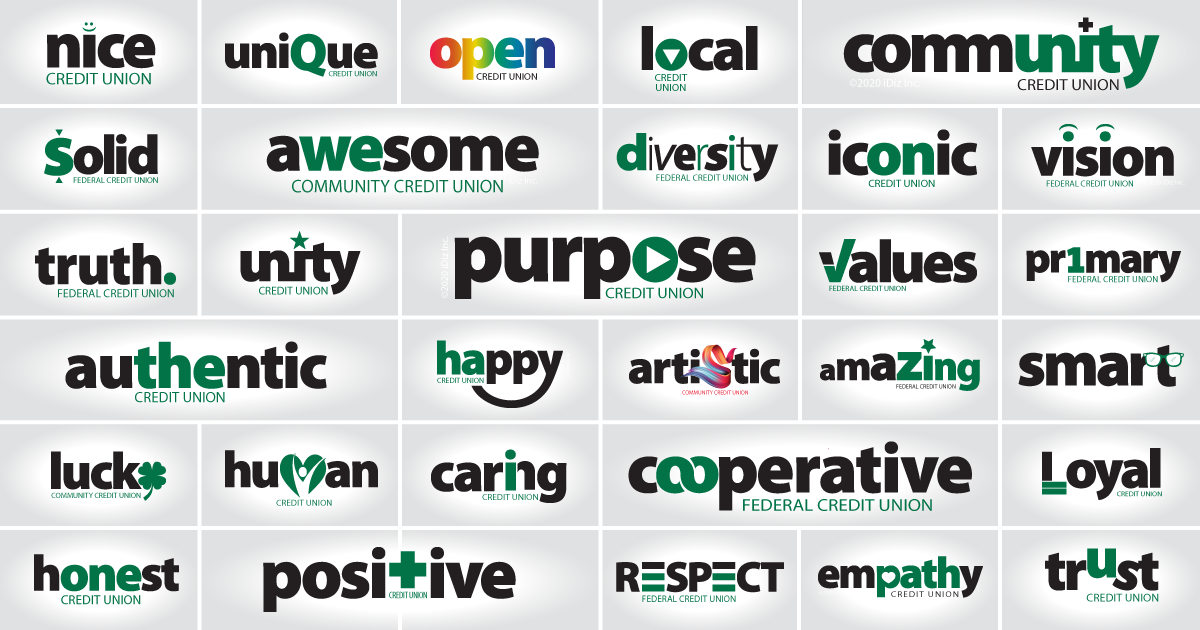
Rebranding: why it’s all about your “why”
It’s human nature to name things to make them easier to understand. We name things in order to identify what they are, organize them into some sort of system, and describe them to others. And once named, that thing then becomes a bit more real to us; we start to feel ownership, more of a…
The car loan we didn’t get at our credit union
Deposits are climbing and credit unions need to make loans. Mortgages are in high demand, but you need consumer lending to stay in balance. And that means car loans. New, and (mostly) used car loans. So why are credit unions, even large CUs, still throwing away so many car loans? Here’s my real-world, real-life, 100%…
What young people actually want (part 2)
A few weeks ago I started asking the young people I know about the things they want from a financial institution. I received a flood of opinions and wrote up some of their main ideas, but now it’s time to get specific: Credit unions have an awareness problem, particularly with young people. Credit unions and…

Is your credit union trustworthy?
Building trust helps business. In fact, many consumers will overlook higher costs if they think they can trust you. With large tech companies’ identity theft and data breaches uncomfortably too common lately, faith in online business has taken a beating. Savvy credit unions should see this as an opportunity to stand out. By taking the…
It’s never too soon to think about your legacy.
In life, there seems to be an innate human desire to make a lasting impact. Sure, your ego wants to be remembered, but you also want to accomplish things that will truly help others in the future. It’s both selfish and unselfish. And that’s OK. Legacy thinking is one way to think longer term. While…
How small credit unions can start thinking big
Small credit unions have a special set of marketing and brand challenges. Budget and time limitations are pretty obvious, and keeping up with technology is always challenging. If you’re a one-person marketing department, or even a part-time marketer wearing a few other hats, here’s how to start thinking about your growth strategy, marketing, and brand…

What young people actually want (part 1)
If you don’t want to talk to young people, I get it. Their memes are confusing and their fashion choices can be scary. But you can’t grow younger if you aren’t really sure what these folks want. The good news is that I went out and talked to the youths for you, and they had…
If you’re targeting everyone, you’re targeting no one.
Of course, every marketer knows “target marketing” is a good idea. After all, it just makes sense; get the right message in front of the right people, and success will rain down. But when it’s time to build a creative brief and develop the message, people seem to get cold feet. “We’re targeting left-handed Moms…
Big Brand Updates: Fix or Fail?
Most brand updates happen for a reason. Something has changed that needs to be fixed for the brand to grow in the future. Recently, several major companies have updated their brands, and of course everyone had an opinion. Some were applauded, while others were panned. Some were a strong Fix, while others were a surprising…
Free product idea: Digital Life Accounts
Just handing over paper money is sooooo 2010, and it’s honestly just a little icky these days. Like most modern humanoids, I live a more digital life. But it’s a little like speaking multiple languages; everyone needs more than one payment method on hand in order to have the best odds of aligning with another…

5 Ways to Make Your Website Personalization less Creepy
Website personalization continues to be one of the hottest marketing trends because it can improve user experience and sales conversions. Most people appreciate when content is tailored. It’s quick, intuitive, and convenient. However, many consumers are also more privacy-aware and suspicious of marketers trying to collect their data. When personalization gets too intrusive, people start to…
Speaking the same language
Sam’s superpower is speaking Spanish, but I can’t say I have the same gift. Five years of German classes didn’t leave a lasting impression, and besides, every German I’ve ever met already speaks impeccable English. But his tale did remind me that even if the language is English, there are still a lot of ways…
Speaking Spanish is my superpower
You wouldn’t know it from my current curmudgeonly outlook, but I was not a particularly shy kid. To hear my family tell it, I could have held a conversation with a brick wall as long as it nodded in the right places. I had this deep-seated need to make friends and be liked. I wanted…
The Double Jesus Day
Long ago, and not so far away, I worked in a mental hospital. I was working my way through college, which should give you an idea of how long ago this was. It paid about the same as burger-flipping, but it was infinitely more interesting, and of course I learned a lot of people skills.…

Give a gift card. Save the world.
During the holiday season, life can get pretty hectic. Throw in an economic recession or pandemic, and you probably feel like you’re just surviving. Finding the right gift for the right person is exhausting, and this year it’s doubly easy to fall behind. So what are you supposed to do when you’re behind on holiday…
Good iDiz (v5): Security CU
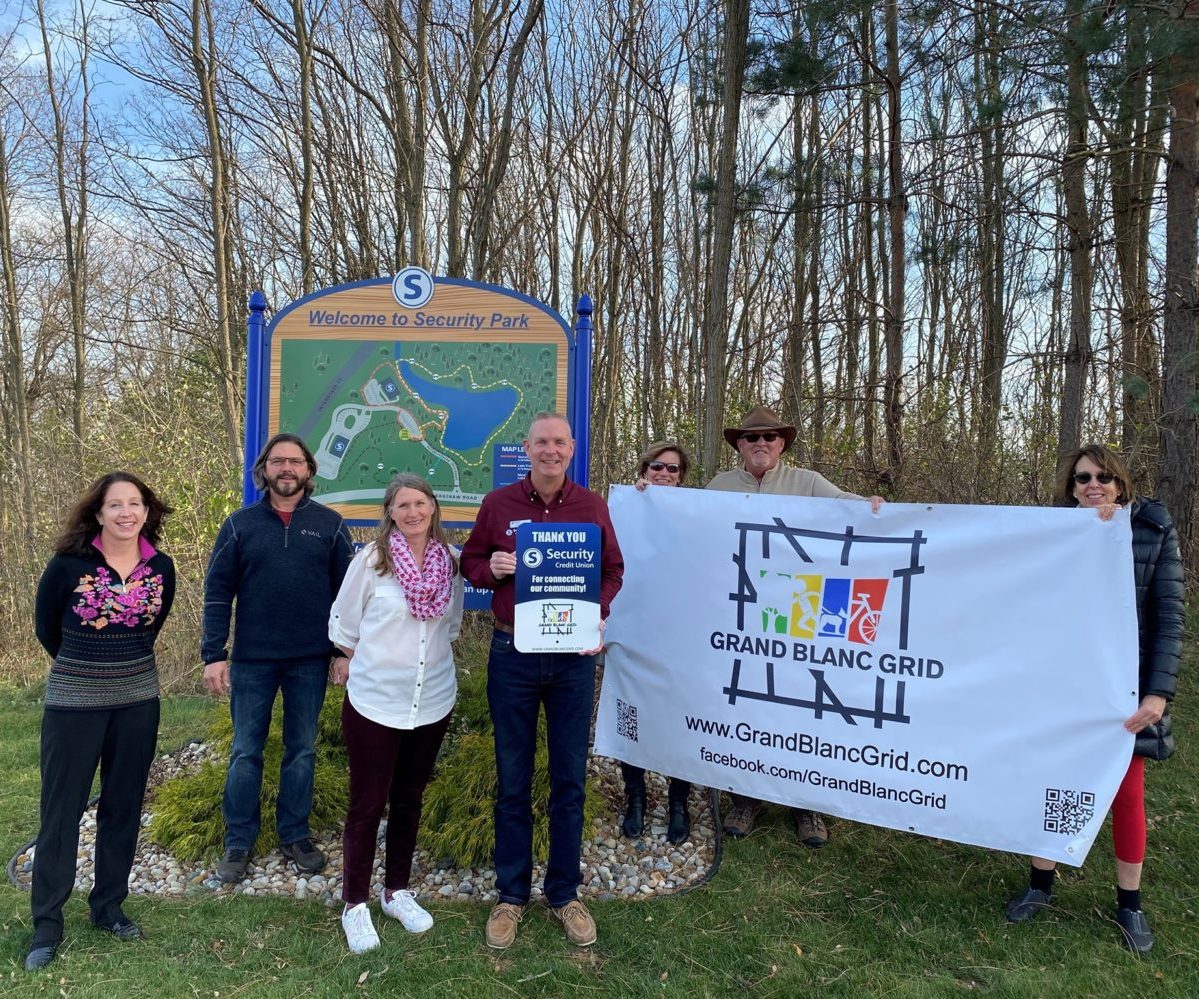
Last month we realized everyone would appreciate hearing a little more good news, so we’re continuing our pleasant positivity publications with a look at the good people over at Security Credit Union! They’ve got community spirit AND holiday spirit! Security CU literally walks the walk These peppy pedestrians were recognized back in November for their…
Would YOU buy from you?
Online shopping has exploded this year, for obvious reasons. But because people have more time available, they are also doing a lot of online research, making sure they buy products from companies they like. They also apply that same process to other decisions – such as deciding where to get a loan, or determining which…

How to Fight Professional Burnout during a Pandemic
Burnout is one of the most debilitating disorders professionals can face. It’s a sneak attack on your mental health that slowly creeps up on you. It can strike anyone in the workplace and can be a challenging condition to treat. And adding the reality of a global pandemic only amplifies the damage. Know the signs.…

3 millennial misconceptions that I’m going to kill, right now
There are a lot of think pieces, blog posts and even news articles out there about millennials and how different we are. Some are more successful than others, but an unfortunate number of them are just plain wrong. I call these millennial misconceptions, mostly for the alliteration. But why do people seem to care about…
What do you mean by “the good guys?”
Who are “the good guys?” How do you know if someone is good? It might be even more difficult to be able to say that about a company. We know that people like to support companies and organizations that make them feel good. They want to know they’re doing the right then when they buy…

Good iDiz (v4): IHCU
In November we decided we’d had enough gloom & doom, so we started something new. Good iDiz is the way we keep our focus on well, good ideas. We’re on the lookout for people offering a helping hand. This week we’re highlighting the helpful folks at IH Credit Union! IH Credit Union extends a helping…

Is your sludge unintentional or intentional?
Sludge in an organization is anything that gets in the way. Sludge creates friction and frustration, slows things down, and makes it harder to get things done. As I’ve said before, the Sludge Monster is a dangerous beast infesting far too many credit unions. Since I’m something of a sludge scholar, I was very interested…

Will Robots Take My Job?
In the movies, robots are sometimes pictured as benevolent assistants to help humans in futuristic settings. After all, they tend to perform specific tasks faster and more accurately than their human counterparts. But will they take over everyone’s jobs? Carl Benedikt Frey and Michael A. Osborne published a report titled “The Future of Employment: How…
Data Digging Disappoints. Duh.
Billions of words and dollars have been spilled on the topic of Big Data and Marketing for credit unions and banks. But far too often, the quality of the offers, messaging and creative sent to those exquisitely preened, pruned, selected and targeted lists gets almost no attention. We see this in quite a few marketing…

Tell us WHY you exist
It is, at worst, an open secret that younger consumers like purpose-driven companies. Values-based organizations. Conscious Capitalism. You get the idea. People view companies more favorably when they have clear goals that are not just “make a profit.” This works particularly well with Millennials and Gen-Z, but it’s pretty strong across the board. But, what’s…

Good iDiz (v3): cPort CU
Last week, we started touting some of the folks we know have deep ties to their local community. This week we’re continuing the trend with another classy community-building credit union: cPort Credit Union! Got some positivity you’d like to share? Help us keep this newsletter going! Let us know about other CUs and organizations helping…

Social media content isn’t one-size-fits-all
Creating good social media content across different platforms can be difficult. It isn’t just about creating images in different sizes, or figuring out how to fit three paragraphs from Facebook into a single tweet. Not all social media platforms were created equally. For one thing, not all social media platforms have the same functionality. There…
Your silence speaks volumes.
Social media has created a unique space online where your presence says as much about you as your absence. In other words, your members pay attention to what you don’t say. Millennials and Gen-Z are more and more important with each passing year, and they care deeply about your values. What do you stand for…

Credit Union Website Analytics: Google Search Console
As I’ve said many times, Credit Union websites are weird. They don’t follow the same sorts of rules as other types of websites, so it can be tough to interpret your data. What’s normal or abnormal? What should your goals be, and where can you make a difference? Fortunately, we’ve built lots of credit union…

Good iDiz (v2): WSFCU
Last week we decided to start focusing on positivity. We’re started looking for examples of community building, charity, and things that generally put a smile on our faces. We hope you’ll help us keep it going. This week, we reached out to some folks we know have deep ties to their local communities. They told…

Good iDiz (v1): Alloya
We’re all about good ideas. However, the world isn’t going to be very normal this week, so we’re doing something different. This Shared iDiz is going to be all about positivity. We’re sharing good news and good vibes, and we hope you’ll help us keep it going. We reached out to our friends and clients…

2020 has been bonkers. Start next year right now.
We know. This year has been absolutely crazy, and you are done with it. All you want to do now is hide behind various screens all day and hope for it all to be over. But there’s still a couple of months to go this year. And things may not return to normal for a…

Why credit unions must kill off Microsoft Internet Explorer (MSIE)
As credit union website developers, one of the banes of our existence is the browser Microsoft Internet Explorer (MSIE). This ancient, archaic, creaking pile of code is absolutely infested with quirks, bugs, and inexplicable behavior. But this isn’t simply web developers whining about weird-looking websites. The biggest problem is that MSIE is absolutely infested with…
Your marketing flow starts with your website
Your website has never been more valuable. If nothing else, the last few months have proven how important your website is to your credit union. It’s the one branch that never closes, the public face that everyone sees. The source of information and access that your members need on a daily basis. It can also…
De-Mummify your Marketing
Is your marketing groaning, moaning, and shuffling its way out to your members? Are you feeling cursed? Forever doomed to create and recreate calcified content? Don’t plague your members with soul-sucking, reanimated marketing campaigns. Here’s a few ideas on how to reinvigorate your marketing and shake off bad voodoo. Quit worshiping the past You can’t…
You want more Millennials? (Part 2)
In my last article, I shared a not-so-secret insight: Millennials are often hard to reach because we just don’t see any reason to get invested in a brand. And most brands aren’t giving us one, so we don’t care. We all know the traditional marketing approaches often don’t work for Millennials. Heck, we’ve been known…
You want more Millennials? (Part 1)
CUs would seem to be in a perfect position to attract Millennials. The foundational concept of people helping people. Banding together to create something where everyone benefits. No shareholders to satisfy, with their just-give-me-that-dividend mindset. CUs literally exist to help their members and their communities. Which is something Millennials can appreciate. So why is it…

Five reasons your website is a fright
In honor of spooky season, let’s talk about a few of the ways your credit union website might be causing horrible moaning and groaning, or even frightening members away. And, more importantly, what you can do about it. 1) It’s mummified and lifeless Does your website just sit there, creepily staring into space, with no…

AI video might be the answer to your problems
When experts demonstrate applications for artificial intelligence (AI), the potential looks amazing. But, the application has always fallen a bit short. AI’s Rough Start One of the problems with AI-created interactions in the past has been it’s lack of “human-ness.” Robotic voice synthesizers and response algorithms created rigid, machine-like experiences. Early AI wasn’t able to…
Give your members a break.
We’re all a little stressed out right now. Our friends and family are stressed. Our bosses and coworkers are stressed. Heck, even our dogs are stressed. Whether it’s being overworked, or overexposed to the news cycle and politics, a lot of us just need a breather. But, hot take, you can look at this burnout…
5 Easy Ways to Generate Email Content Ideas
Email marketing newsletters are still an effective marketing tool. But how do you keep your audience coming back for more? You’d think the process would be easier over time, but it’s actually more challenging. Each new article seems to overlap content written in the past. Below is a short list of easy wins for e-newsletter…
What’s your Mission?
I have quite a few tools from a company called iFixit. They sell parts and tools for fixing lots of things (mostly cell phones) you’re not supposed to fix. They don’t just sell teensy weird screwdrivers and spudgers, though; their mission is nothing less than “Teach the world to fix every single thing.” And part…
Sex, Brands, and Rock & Roll
Don’t you just love to see marketing that’s, you know, good? There were a couple of examples of fun, interesting, and ultimately effective marketing that we picked up on this past week. The first was a bottled-water alternative called Liquid Death. The second was a racy, definitely cheeky (excuse my dad pun), and likely NSFW…

Don’t forget to listen to your followers.
There are plenty of ways to get member feedback: take a poll, distribute surveys, and ask your call center for a list of FAQs. But the place where a lot of CUs are missing the mark, however, is social listening. Social listening is an important part of your social media strategy and integral to guiding…
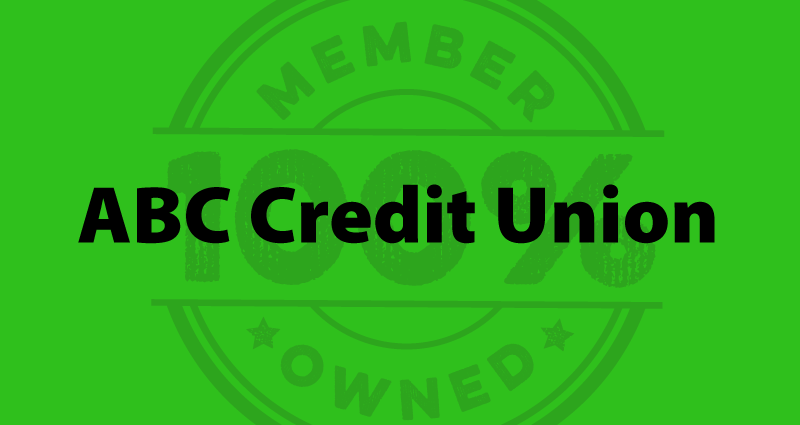
FREE ICON: 100% Member Owned
Last week I saw a semi-trailer emblazoned with a company logo and the words “100% Employee Owned” underneath, and I thought it was a great way to differentiate their company from all of the others. Then I started wondering why credit unions don’t say something similar. After all, CU members are the owners of their…

Streaming ain’t radio.
If you’re running ads in audio streaming services like Pandora, Spotify, podcasts, etc., read the room. Tailor your message, offer, script, and production to the context. A commercial in a listener’s headphones while listening to a finely tuned personal playlist feels a lot more intrusive than listening to the radio. You’re in a space the listener…

You need to be social to grow Social Media
You’ve done it. You created accounts for your Credit Union on every social media platform, picked your social media management tool, and started planting some custom content. You post at the recommended times, and answer your followers’ and fans’ messages. In short, you’ve planted your social media garden. Congrats! Good job! But your engagement, the…
How your website can help members help themselves
Even though most CUs have branches that are at least partially open, many members still prefer to manage their money and get the answers they need online or by phone rather than in-person. Which is why one of the consistent side effects for the past few years has been greatly increased call volume at credit…
Five ways credit unions can put that deposit surge to work
From the national data, and what we’re hearing from our clients, credit unions have seen a deposit surge in the second quarter of 2020. Members are spending less, many are getting back to work, and everyone wants to build their emergency funds in a safe place. Driven by record low rates, mortgages and mortgage refis…

Your best social media marketing tool
Social media is based on people sharing ideas and information, creating online communities and conversations. We’ve already told you about a few of the social media management systems we’ve tested, and the importance of maintaining your presence on social media. But, to let you in on a little trade secret, you already have access to…
I went Social Media Management Speed Dating
Recently I wrote an article about how important it is to include social media in your digital strategy, but of course someone still has to make it happen. For a few of our clients that someone was me. So, I decided to “date” a few different social media management systems to see which ones might…
Right now, your digital presence is who you are.
With everything happening these days, your digital presence is either your most prominent asset or your most obviously-neglected marketing liability for the foreseeable future. People have now been stuck at home or afraid to come see you for months. Many are planning on staying home for a long time. That makes your digital presence more…
What if we turned branches inside-out?
In an earlier SharediDiz article, I just had to admit that I’ve always been a branch hater. When I need to get something done, visiting a branch has always been the absolute last resort. But maybe I was being a little harsh. A lot of people still like branches. They can make people feel more…
Ten fast video content ideas for credit unions
Everyone knows that video content is the most engaging by far on websites and social media. That goes double when branch access is restricted, and people are depending heavily on online access. Of course, credit union products and services are a little abstract, so it can be hard to figure what’s interesting and engaging. Here…
I hate branches
I’m a branch hater. There, I said it. When I need to get something done with money, visiting a credit union branch has been the absolute last resort for, well, for pretty much my whole life. Branches are time-consuming, inconvenient, and never open when I need them. How many of your members feel the same way? How many…
When opportunity pops up
Marketers with experience know that you can’t reach every demographic with a single campaign. They also know that when you have a limited budget, it’s better to focus on key target audiences in order to get the results that are needed. But sometimes a larger marketing opportunity pops up that is too good to ignore.…

Don’t merge without your members
If you have been part of the credit union world for any length of time, you know there have been a lot of mergers, even while greatly increasing membership and offering expanded benefits. And it looks like those merger trends will continue. Over the years, we’ve had the honor of helping several credit unions navigate these mergers. And we’ve…
How is a credit union supposed to respond to current events?
How is a credit union supposed to respond to current events? Now, I know that most credit union CEOs and Boards typically don't respond to current events. But these issues are not going away any time soon, and how you respond today will affect how your credit union is perceived by the members you need to stay viable in the future.
Three ways credit unions can boost loans in weird times
Everything is downside-up and frontwards-back right now, and probably will be for a while. Still, life goes on for your members and CU marketers need to do their part to keep interest income flowing and make sure the lights stay on. And what we’re hearing from our credit union clients lately is loud and clear:…
How credit unions can avoid Analysis Paralysis
Have you ever been part of a group that has come up with so many options that the only decision has been to not make a decision? Or where someone is so convinced that there is a perfect solution still out there, that the fear of making the wrong decision has everyone overanalyzing and overthinking…
How to add financial calculators to your credit union website
Financial calculators are a great way to make your credit union’s website more useful and interactive for your members. Credit union websites are a little different than most; one way to look at it is that your website is primarily a tool, not a destination: members visit your website to get things done. Good financial…

How to add secure forms to your credit union website
One of the more common questions we get from our credit union website clients is “how can we put secure forms on our website?” Credit unions can be far more efficient if they replace paper forms and processes with online forms. And of course, no-contact member service is a lot safer all around if you…
How credit unions could help the helpers
What with all this… let’s just call it “stuff” going on in the world right now, credit unions all over are leading the response in a lot of innovative ways. After all, “people helping people” is part of every credit union’s DNA. Much of what we’ve seen so far are CUs offering flexibility to their…
What to do NEXT
NOW that you have had the chance to rethink, reorganize and re-prioritize, the next step to take is to decide what to do NEXT. Of course, what you do next will depend a lot on what the economy does. Depending upon which “expert” you listen to, the economy will likely mimic one of two classic…

What you can do NOW
LimboLand. The never-ending CoronaVirus Vocation Vacation. Whatever you call it, we’ve all had to do a lot of adjusting to our shared New Reality. Some of us have adapted well. Others, well, not so much. But if you look at it in a certain way, you just may start to see this as an amazing…
What part of your brain are you listening to these days?
The last few weeks have been rough on some people, while others seem to be taking it stride. For every person that is reasonably keeping a social distance, wearing a mask while out in public, or having their groceries delivered, there’s another person flouting the guidelines and loudly complaining that they can’t go out to…
How do you market checking when no one writes checks?
Paper checks may be fading, but checking will likely be with us for years to come. And I suspect that the term “checking” will linger long past the time payments are telepathic and humans have stopped chopping up trees to make paper. After all, that amazing all-purpose portable computer, navigator, and communicator sitting on your…
So is it OK for credit unions to start marketing again?
Credit unions all over the country have been rising to the challenges of the COVID-19 crisis with all kinds of creative solutions for keeping members and staff healthy and coping with the economic fallout. But as CU marketers look forward through the crisis and the recovery, they’re starting to wonder… when is it going to…
How COVID-19 has changed credit union website stats
A few days ago, I saw some very interesting stats from Google on how profoundly movement patterns have changed in recent weeks. The data comes from anonymized location data from Android users who have Location History turned on: https://www.google.com/covid19/mobility/ And I started wondering… what effects can we see by comparing the last few weeks of…
Turn your CU website into a virus fighter
Now that we’re here in the new normal, your credit union’s website is the focal point of contact with your members. With everyone hunkered down and branches mostly closed, now is the time to beef up your website to make sure your members get what they need to weather the storm. Here’s what we’ve been…
How to navigate the New Normal
We hope everyone is doing OK in…well, what should we call these times? The Coronazone? The New Normal? In order to help everyone navigate recent challenges, we’d like to share a few tips to hopefully make your life and work a little easier in the coming weeks. Working remotely takes practice Working remotely has always…
Taming the Weird Times Monster
The Weird Times monster is hairy, scary, and totally unpredictable, constantly sprouting freaky new tentacles to worry about. Whatever your personal, political, or economic beliefs, we can all agree on one thing: the Weird Times monster has been tromping all over the place for the last few years, and it doesn’t look like he’ll be…

Do you know where your ideas are?
It’s time for a new loan promotion, and you need A Big Idea. A Better Idea, a capital-I IDEA that gets better results than last time. Something new, something fresh, that gets members’ attention. Something that helps them think about possibilities, then take action. So why is your notepad still mostly blank except for a…
You might be surprised by what a toddler can teach you
There are certain things that bum me out. Gray skies. Drizzly rain that can’t quite make up its mind to turn to snow. The end of football season. Add in the realization that election year posturing and partisanship is just getting started, and I find myself wanting to go to my happy place. Which is…
The Department of Missing-The-Boat
Today we have so many different topics to talk about, (okay, rant about), that we chose to share them all instead. Big thanks (I think) to the sources linked for the extra grey hairs over the last few weeks. Where are the CUs on automatic savings? This is one of the planet’s biggest no-brainers for member…
What will lenders do when people stop owning cars?
This jelly-bean-looking EV is already signing people up for a waitlist while it goes through testing. Because electric motors and batteries take up less space, the inside of a Canoo is “as big as a Suburban, with a smaller footprint than a Prius.” The interior has sofa-like seating, and “enough room to easily fit a…

Dot org, dot com, dot what? How to keep your domain names safe.
Every website needs a domain name so that human beings can find it. In fact, your domain name is one of the most valuable assets you own. And of course, email doesn’t work without a domain name. That’s why it’s vitally important to make sure your domain names are always protected, and that you have…
Why are you paying attention to everything but MX?
For an industry based on the idea of People Helping People, why aren’t more credit unions laser-focused on Member Experience (MX)? Don’t they know that all those little annoyances add up? Aren’t fewer hassles supposed to be a CU advantage over banks? For example, my CU apparently decided to switch service providers that track whether…
20 Monster Ideas for a Monster 2020: Part 1
It’s a new decade, and it’s time for some new ways of thinking. We sat down and made a list of 20 Monster Ideas we’d like credit union marketers to ponder as we head into 2020. Here are the first ten ways to pump up differentiation, connect with the next generation, break out of your…
20 Monster Ideas for a Monster 2020: Part 2
It’s a new decade, and it’s time for some new ways of thinking. We sat down and made a list of 20 Monster Ideas we’d like credit union marketers to ponder as we head into 2020. Last week, we shared the first ten ways to pump up differentiation, connect with the next generation, break out…
Don’t just hit the bullseye. Obliterate it.
Every marketing promotion has a built-in bullseye, a number you’re supposed to meet or beat. And that’s not surprising. Credit unions are jam-packed with Numbers People. Maybe that’s why most of the attention in credit union marketing these days is on Big Data. Numbers People love Big Data. because Big Data is all about “who”…

It’s a Tech Takeover! Everybody panic!
Google is doing checking accounts! Apple has a credit card! Walmart has both! It’s a Tech Takeover!! (Cue EVERYBODY-PANIC.gif) Everyone has been predicting a tech/retail giant takeover of personal banking, specifically checking or “transaction” accounts, for a while, but… is it really time to panic? Or can we panic later? What’s the right level of…
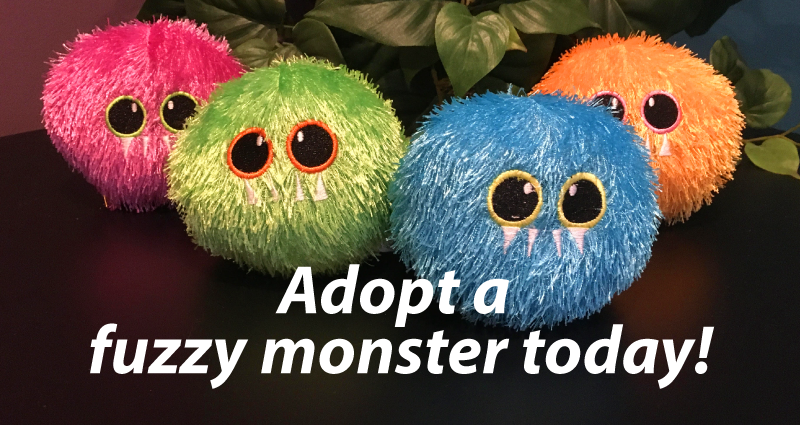
Too bad all your monsters aren’t this fuzzy.
‘Tis the season of spooky, so it’s the perfect time to talk about credit union monsters – and find new homes for a few more of our snuggly, fuzzy, freaky friends! Here on the Shared iDiz blog, we’ve helped credit union marketers all over the country tame all kinds of scary credit union monsters. Everything…
A better way to build a credit union website RFP
We’ve built a lot of credit union websites and we’ve seen and responded to a lot of website RFPs (Requests for Proposals). And let’s be honest here: most RFPs and RFP processes… aren’t that great. Most CU website RFPs tend to be based on generic “fill in the blank” templates that focus on technology, laundry…

How to buy a new credit union website
Before you begin a credit union website project or start writing an RFP (Request For Proposals), there are three main questions to think over: “why”, “how”, and “who”? Why? Make sure you’re clear on your strategic and long-term reasons for updating your credit union’s website. Technology moves fast, and the world changes even faster. Focus…

Five ways a lame website bleeds members and money
When a credit union is considering a shiny new website with all the bells and whistles, they’re naturally concerned about what it’s going to cost.* Sure, you have to be careful with your members’ money, but it’s also important to factor in what that lame old website might be costing you every day: 1. A…

CU Budgeting for Weird Times: Double Down on Different
It’s budget season for credit unions, but it’s also silly season in politics and wacky times in finance. Even the weather is off-the-charts odd, and strange growth-eating monsters are creeping over the horizon in every direction. In times like these, how do you even begin to make your plans for the strange and stranger times…
CU Budgets in Strange Days: Put Your Money Where Your Monsters Are
You can’t just build a CU budget for your marketing and website based on “oh, whatever we did last year“, and that goes double when times are getting Strange.* *(In last week’s article, we pointed out that strange days and weird times are here, and things are only going to get Weirder in 2020.) Fortunately,…

Tinker, tweak, and try | CU website best practices
What can you do right now to start getting more out of your CU website? It’s simple: tinker, tweak, and try. Try stuff. Experiment. Maybe even twiddle. Make some tweaks and see what happens. Poke around for things you can fix or improve. A credit union website is sort of a living thing. It’s never…
The truth will set you free
Some of our favorite “shop talk” with fellow credit union marketers over relaxing beverages are tales of losing clients because we told them the truth. You might say that one of our traits as a company (and, honestly, as individuals) is bluntness; we’ll say and ask about things that make people uncomfortable. It’s a gift.…
A credit union? How do you expect me to market THAT?!
You’re a world-class marketer (even if still waiting on the world to recognize that fact), and a new client walks in your door. You ask how you can help, and they start talking about their business. Seems they’ve been around for over 60 years, with a decent customer base. Unfortunately that base is starting to…
Building a Killer CU Landing Page | Digital Marketing Best Practices
You’ve built the perfect marketing campaign, a perfectly orchestrated symphony of traditional and digital media, targeted to a nice juicy list of hot prospects. People are clicking and tapping, but without a great landing page, you might faceplant at the finish line. Here’s how to build a credit union landing page that turns a list…
Why you’re crazy if your head marketer isn’t a VP
I’m just going to come right out and say it for all the credit union CEOs and Boards out there: If the person in charge of Marketing and Brand is not at least a Vice President level executive reporting directly to the CEO, you’re doing it wrong. We’ve worked with hundreds of credit unions over…
Remember your past. Build on your present. Brand for your future.
Rebranding a credit union is tough. Everyone has an opinion, and most aren’t afraid to state it. For every member that identifies with their shared history, there are others that see a need to update their brand for the future. And both have a point. But time keeps moving, and credit unions have had to…
Culture vs. cost: how to find the right CU partners
A good fit between your credit union’s culture and your agency’s culture is the single biggest factor in success – far more than pricing. In fact, compatible cultures will minimize your costs and maximize marketing and brand effectiveness. There are lots of good companies out there doing great work for credit unions. While none of…
How many seconds to get a human?
Two extraordinary things just happened to me: An actual human picked up the phone when I called a large corporation with a technical problem. The human quickly resolved my problem. A few days ago, I found myself locked out of my Square account. (Among other things, Square allows regular folks to accept credit cards.) I…

Why credit unions should simplify absolutely everything
We already know that you should pay attention to simplifying copy to lower the reading level on your credit union’s website. It’ll make your site more understandable to everyone, not just brainiacs, and could even give your site an SEO boost. But that’s just a start. Simplifying the language you use shouldn’t begin and end…
Slaying the Sludge Monster
He’s covered in sticky tentacles of frustration, endless inescapable globs of pointless paperwork, ridiculous rules, and cruel barbs of rejection and fees. The Sludge Monster is clogging up your membership growth, and he’s costing your credit union members and money left and right. So what is sludge, anyway? Sludge is anything that creates friction, frustration,…
Four things to try when you have no idea what to do next.
Staring at a blank piece of paper. Stuttering to a stop halfway into a project, not knowing how to keep it moving. Hitting a dead end that you didn’t see coming. We’ve all experienced that stomach knot of panic when you have no idea what to do next. Lucky for us there are at least…
Why you should stop marketing to Millennials
Now wait a minute! Aren’t Millennials where all of us are supposed to be focusing our marketing? Why would I stop marketing to Millennials? After all, there are 80 million of them, with $200 billion in annual buying power. They’re obviously the hottest generation to target because they will need multiple auto loans, credit cards,…
Bringing people together in a No Front Porch World
Front porches used to be the ideal gathering places. People used to sit outside to cool off, greeting neighbors walking by and inviting them up for a face-to-face chat. It was a great way to bring people together, catch up on community news, and share some iced tea. Then air conditioning killed the front porch.…
CU Website Best Practices: Be Nice to Bookmarkers
One odd trait we’ve seen on the credit union websites we build is that most have quite a few – sometimes thousands of – visitors who repeatedly arrive via bookmarks. Obviously, you want to be very, very nice to frequent visitors, especially ones who care enough to bookmark something on your site and return regularly.…
Your members want more shortcuts
Your credit union needs to become a shortcut. A life hack. A pro tip. People love that feeling of skipping the line, of getting the most out of minimum effort. And credit unions are perfectly positioned to deliver. Words like “convenience” or “24-hour access” don’t mean much any more. They’re cheesy, misused, and tired. But…
Maybe you just need to reboot your CU?
A credit union is kind of like a computer. Multiple components interfacing with processes that all have to work together to get anything done. Competing demands for limited resources that are trying to do too many things at once. Lots and lots of data to process, that everyone wants immediately, if not sooner. With all…
Digital Marketing Best Practices: Landing page or Microsite?
When you’re creating and planning digital marketing, one of the simplest but most important questions is, “What, exactly, are we asking people to do? And what’s the best way to get them to do it?” There are tons of possibilities, and the right answer depends on your goals. We’ll discuss two very different directions: landing…
Where do you get great content for great content marketing?
Content marketing is a great way to move away from interruption marketing and build relationships and trust. But where does all the content come from?
How to build the credit union you’ve always wanted
Bricks, mortar, steel and glass are okay. They just aren’t the right materials to build the credit union you’ve always wanted. One-of-a-kind CUs are built on more fundamental components. Elements that give your credit union the rock-solid foundation it needs. A strong, but flexible space that provides a base for everything you want to do.…
Career lessons from the funny farm
I’ve had an unusual career. After the watermelon farm, and while I was in college and playing in a classic rock band, I also worked full time at a psychiatric hospital for four and a half years. (I didn’t get much sleep, either…) Like anyone who’s worked in a hospital, I also have an endless…

Why daily details matter
I recently read an article about the rise of cupholders in cars. It turns out to be a more interesting and important topic than you might think. And there are lessons every marketer can learn from the Great Cupholder Revolution. In a nutshell, cupholders in American cars started entering the mainstream in the 1960s, as…
Is your website written for brainiacs?
Did you realize that a high reading level on your website might be hurting your search results and making your site less useful? If Google’s algorithm thinks you’re writing for brainiacs instead of the average person, it could be showing up in your search results. Which makes sense, since search engines are looking for websites…
Should you: Stay in your Lane, or Think like a Human?
If we have learned anything in this era of ‘woke’ advertising, it’s that companies need to think like a human instead of a corporation. Whether you agree or not, most people believe that businesses have a social responsibility in the marketing they present. Ads and images that show rigid gender roles and sexual stereotypes, unrealistic…
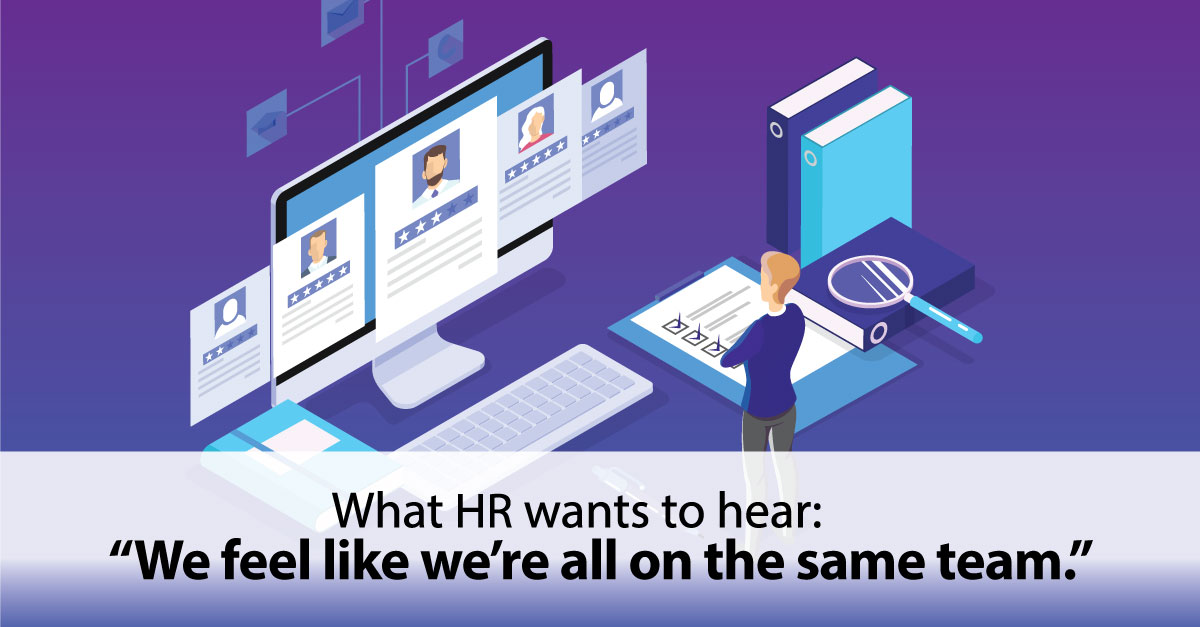
Five fast intranet benefits for HR
An intranet is an internal website used by staff to share information and resources and to communicate with each other. Here are the top five ways your HR department can benefit from a better, faster, easier intranet!
Five fast intranet benefits for Operations
When staff can easily share information, resources and communicate with each other, everything goes smoother. Here are the top five ways Operations can benefit from a better, faster, easier intranet: More service consistency By sharing information across locations and departments, you’ll create more consistency in decisions, expectations, and service standards. Fewer errors With a wide…
Five fast intranet benefits for CEOs
An intranet is a great way to make sure everyone is on the same page, even if they're scattered across multiple locations. Here are the top five ways a CEO can benefit from a better, faster, easier intranet!
Five fast intranet benefits for Marketing
Most people think of an intranet as an internal website used by staff to share information and resources and to communicate with each other. But did you know an intranet is also an amazing Marketing tool?
All I Want for my CU Marketing Christmas
Dear Santa: I’ve been a very good little credit union marketer this year. I kept my desk clean, tracked ROI faithfully, surfed the mobile wave, and leveraged channel preferences to optimize KPIs across key brand value concepts. But there are just a few little, teensy-weensy things I’d like to see under the tree this year…
Fees need marketing love, too
For credit union marketers, fees can be a real pain in the patoot. There are all those pesky clouds of fine print we have to stuff in somewhere, not to mention all those negative vibes. But fees are a necessary part of keeping the lights on at every credit union. Fees make up most of…
The fun and easy way to dip a toe into digital marketing
We understand that every credit union is at a different place in their digital marketing journey. Not everyone is ready to saddle up the digital marketing monster and thunder off into the e-sunset. Especially if your time is limited and your budget is even more limited. But if you ARE interested in knowing a bit…

How to Nuke the Numb Numbers Monster
The Numb Numbers Monster has two heads facing different directions; one that makes all kinds of brand promises, and one that actually does the opposite. Fortunately, you can train the Numb Numbers Monster so that both faces sing the same song, but first you have to answer one big question: Do your CU’s numbers match…

Saddle up the Digital Marketing Monster
Digital Marketing is a huge, slippery, multi-armed beast, with tentacles reaching out in every direction. But if you can manage to grab hold and hang on, this powerful monster can take you for the ROI ride of a lifetime. But how do you rope this beast? There’s no place to put a saddle! Whoa there,…
Grounding the Static Strategy Monster
Usually forgotten and unloved, this dusty demon of the desk drawer can guide you to incredible results if you know how to harness its power. But ignore it at your peril, because the Static Strategy Monster can easily short-circuit lofty goals and send your results crashing back down to reality. Of course, that assumes you…
Dumping the Doubt Monster
It’s back there, sneaking around and lurking in the back of your head. Playing on your fears. Whispering in your ear why you shouldn’t do this, why that isn’t going to work, that no one cares what you do (except when you <inevitably> screw things up). It’s the Doubt Monster! Sneaky, insidious and ever-present, slowly gnawing…
Beating the Blah Brand Blob
The Blah Brand Blob is a close cousin to the Bankthink Behemoth and the Monster of Meh. Huge, fuzzy, and sprawling, this gelatinous glob tries to be everything to everyone and slowly smothers growth under a flood of ignorable messaging, lukewarm shades of boring blue, and halfhearted, tedious mission statements. But you can turn your…
Beating the Bankthink Behemoth
Ever lying in wait for credit union adventurers, the horrible Bankthink Behemoth lures victims with the sweet siren call of pure profit and mindless, strictly-by-the-numbers management. If you fall into its clutches, the Bankthink Behemoth will slowly digest your credit union’s heart, soul, and uniqueness, leaving nothing but a cold, hard shriveled mini-bank. It takes…
Beefing Up the Wimpy Website Monster
Scrawny, misshapen, and horribly behind the times, this chronically malnourished and neglected little freak can do enormous damage as he gnaws away at your brand and member growth. The Wimpy Website Monster does his work in those dusty, dark, forgotten corners of code, slashing SEO results, catering to long-dead browsers, driving away members, and generally…
Taming the Member Aging Monster
It’s big, it’s wrinkly, and it’s screaming for higher certificate rates. And before you know it, one dark and stormy night you’ll wake up and realize that the average age of your members is creeping toward the 50s. That’s right, it’s the Member Aging Monster, and even though it’s slow, it’s one of your credit…
Squishing the Monster of Meh
Quick, what’s your biggest Marketing monster? I bet you said something like “Budget and resources! I need more money and power! And a time machine!” You’re not alone. In every survey of CU Marketers I’ve seen, “resources” is the top concern or obstacle. But I think we’ve slightly mislabeled this monster. Or maybe the real…

Brand? Website? Why not both?
We’ve built lots of credit union websites. And we started noticing something interesting: many of our CU website projects took a slight detour to fix or update branding as well. Sometimes it was just a little visual cleanup – fixing little graphic or type inconsistencies, or updating an awkward symbol. At other times, the process…
You’re not allowed to separate digital, branding, and marketing anymore.
It would help if everyone just agreed that digital, branding, and marketing have been merged into one big multi-dimensional entity. I mean, can you really imagine working on one without connecting it to the others? In fact, all the components of digital, branding, and marketing are so tightly woven together that any CEO that tries…
Oh, how adorable! They don’t know how to use the internet.
Have you ever noticed a disconnect between what one person thinks is normal and what someone else thinks is? My son and his wife (age 31) are expecting our first grandchild. My sister-in-law, co-hosting a baby shower for them, asked where they were registered. My daughter-in-law replied, “Amazon” and sent a link about 50-60 characters long. My…

What’s your best crazy CU idea?
Crazy ideas are a great way to stretch your thinking for any project or problem. When we’re building a shiny new credit union website, my favorite question to ask is something like this: “What’s your biggest, craziest, blue-sky, out-of-left-field idea for your credit union’s new website?” Sure, sometimes you get some tacky ideas, like a…
What the Jeep Wave can teach credit unions
Until this past weekend, I had never heard of The Jeep Wave. Of course, that may be because no one in my family has ever owned a Jeep, but apparently it comes as standard equipment with most models, according to my good buddy Mike, who proudly drives an ’04 TJ. What is the Jeep Wave,…
Five ways marketing can spread that CU infection
Members and employees who understand, believe in, and can live out your brand and your mission are pure gold. Part of your job as a marketer is to attract these people and make sure they catch the CU bug. It’s not just an HR or membership thing; it’s being a good brand steward. Wear your…

Where do ideas come from?
Did you know that everyone was once a creative genius? As infants we had twice as many connections between the neurons in our brain. And without knowing any language, just by watching and listening, we were able to figure out how to get whatever we wanted from those big goofy people around us...
Five reasons meetspace matters
Ideally, your credit union’s in-person and virtual experiences complement and reinforce each other; they’re different sides of the same brand. “Meatspace” (or should we call it “meetspace”?) connections cement a brand in a member’s mind, and create important lifelong connections in ways that “screenspace” can’t. We build a lot of websites for credit unions, but…

iDiz Labs: what we’re working on next for CU websites
At iDiz, we try to push the state of the art forward with every credit union website we build. So we thought you might like a glimpse behind the curtain of a few features and concepts we’ve been working on for new and existing CU sites. Voice search The mobile revolution is old news, but now…
Five trends in credit union websites that you need to know
If you’re considering a redesign of your website, here are five trends in credit union websites that you need to know in order to make your credit union’s next website work better for you and your members. The slider must die. Sorry, it’s been a fixture of home page design for years, but the animated…
Is it time to panic about alternate financial providers?
As Kent mentioned last week in his post-Financial-Brand-Forum recap, there seems to be a certain amount of indecision about whether it’s time to panic, and exactly what we should panic about. Should credit unions panic about Walmart sticking their very large toes into our personal financial services turf? Or Amazon, Apple, or Costco? All the…
I went to the Financial Brand Forum so you didn’t have to.
In just a few years the Financial Brand Forum in Vegas has developed quite a following, so I decided to check it out. What I found most interesting was that there seemed to be two competing schools of thought espoused throughout the event, and it wasn’t credit unions v. banks. It was more like a…
Do what the competition won’t
Walmart recently unveiled a new website, built around online shopping. Probably not earth-shattering news, but what’s interesting is that the site is designed and built specifically to be the anti-Amazon. Every aspect of the look, the interface, the processes, and the entire experience is carefully massaged to be different than Amazon. (And hopefully better from…
Why credit union websites are weird
Let’s face it: credit union websites are just plain weird. They don’t follow the rules of normal websites doing normal stuff like selling zombie coffee mugs. We’ve built lots of credit union websites, so we’re sort of used to the oddities. But if you’re trying to make sense of the “usual” advice and rules for…
Stop grandpa marketing
In order to keep the new member pipeline flowing, credit unions have to start doing a better job of targeting people 16-21 and even younger. This is when financial habits are established that will last a lifetime, and turn them into your core members in the future. Of course, that’s easier said than done. How…

Give young members a CU to believe in
Young members are on everyone’s mind; they’re essential for every credit union’s long-term survival, yet the average age of CU members creeps up every year. But how do you bring in these mysterious millennials, and their even more mysterious younger siblings? A snarky blog and a shiny online banking app are only part of the…
How to Brainstorm for Results (and get something good)
It’s time to bring in the troops for a brainstorming session. Because you need ideas. You might need ways to solve a big ugly problem or keep a small problem from growing. Or maybe you need a dose of fresh, deep thinking about long-term strategy. Ordinary, obvious ideas won’t do. You need so-good-they’ll-instantly-be- recognized-as-amazing ideas.…
Stuck at OK? Push for Amazing.
So there you are, doing… OK. Marketing is ticking along like a well-oiled machine, same budget as last year, you’re a little under budget, and you’re on track to pretty much meet your modest growth goals for the year, just like you did last year, and the year before that, with the same old familiar…

How to make sure your domain name (and your website) stays yours
Every website needs a domain name so human beings can find it. However, things like domain name registration, DNS, and logins sometimes get lost or forgotten over time. Here’s how you can take a few moments right now to make sure your domain name (and your website) stays yours. WHOIS the boss of your domain name?…
Why your brainstorm sessions need to work like your brain.
If you’ve ever been part of a brainstorm session that boomeranged from over-the-top-zany ideas to more-practical-but-not-quite-boring concepts, then you have a pretty good idea how your brain works. Which isn’t how everyone thought brains worked, not that long ago. Everyone used to think there were two sides to a brain, and two types of people,…
Ammo for a website upgrade
Are you a credit union marketer suffering from a case of budgetus minimus with a website that positively reeks of 2009? We’re happy to help you pry open those purse strings and get the resources you need to revitalize and relaunch your website. Here are five good signs it’s past time for a website upgrade.…
Say just one thing to make your marketing more effective
Say one thing. Say it well. There. That’s most of what you need to know to be an effective credit union marketer. The more focused your message, the better it’s going to work. “Simplicate, and add lightness” – Ed Heinemann, famed Aircraft Designer Of course, like everything that’s simple in theory, adding lightness in real…
First you have to know what you don’t know
What you don’t know can hurt your credit union’s future. Because the world has been changing even if you haven’t. Your 3-car garage in the suburbs isn’t even on the radar of young, potential members that prefer to live in a city where they won’t ever need a car, not to mention a space to…

Think screenspace, not meatspace
For most credit unions, each member drops by your website an average at least four or five times a month. It’s open 24/7/365, and you can do things with color, interaction, and motion on a screen you just can’t do with a postcard or in a branch. Add in mobile app usage, and, well, you…

SEO4CUs: Making Friends with Google
Google’s approach to online search helped position them as a leader, which has also led to companies trying to figure out how to get to the top of their page rankings. Today, Search Engine Optimization (SEO) has become a critical component of having an online presence...

Why CU Marketers should quit their jobs in 2018
Quick, what would you say you do? If one of the first few words out of your mouth is “marketing”, you likely need to quit your job in 2018 — and immediately start your new career as “VP of Member Experience”. Or maybe even “Chief Experience Officer” (CXO). The title “Experience Officer” may be new,…

Career lessons from the watermelon farm
I had a strange career before getting mixed up with credit unions, including a few years working at a mental hospital and 12 years in a busy rock band. But the one thing that makes people stop and ask questions is my time as a watermelon farmer in southern Indiana. I spent every summer when…
How to buy a credit union website (part 2): Choosing the right CMS
In our last post, “How to buy a credit union website“, we discussed how to start figuring out what you need in a website, and we provided a simple wish list you can download. In this installment, we’ll delve deeper into how to choose the right CMS (Content Management System) underneath your site and what factors…

How to buy a credit union website
If your current website is more than two or three years old, it’s already time to start planning its replacement. Technology moves fast, and time on the internet moves even faster. Plus, your members, your brand, and your credit union continue to grow and evolve. What you need your site to do today is much…
Are your potential members afraid of financial commitment?
If your membership growth numbers are a little tepid, maybe you can spice things up by reducing the fears that go along with financial commitment. We marketers tend to focus on the positives, but it’s well worth thinking about the negatives that might be creating barriers. What are people afraid of? What’s scary or unknown…

What to do when a lawyer is about to pop up and go “BOO!”
ADA lawsuits on website accessibility have become a big, scary topic lately in the credit union world. We’ve fielded so many calls and questions from credit unions that we’ve ended up writing multiple blog posts and giving free webinars on the topic. But with the right mindset, improving accessibility is actually an opportunity to make your…
Before trying “latest and greatest” in marketing tech…
Credit union marketers are being bombarded with so many options for the “latest and greatest” in marketing tech (marketing automation, AI, personalization, big data, chatbots, biometrics and more), that it’s hard to keep up. But we certainly pay attention. After all, the “next big thing” is always fascinating, isn’t it? Especially when it is wrapped in shiny…
Web Accessibility: Fixing Contrast Conundrums
One of the more common website accessibility/ADA issues we see is contrast — when there’s not enough contrast between type and the background color, people with certain visual problems might have trouble reading the text. Fixing the problem is pretty straightforward from a technical standpoint, but it can lead to some tough decisions about brand…
Making the world a better place, one tomato at a time
We’re big on making the world a better place, and we’re even bigger fans of those that actually do it. A few days ago, we ran across this link to a fascinating National Geographic article on how the Netherlands, a country with 1/270th the area of the US, has become the world’s #2 exporter of food. (Take…

How does anyone expect to be heard, when everyone is talking?
Why does everyone seem to be talking all of the time? And how does anyone expect to be heard, when everyone is talking? Thanks to the web and social media, everyone who wants to share their thoughts with the world can do so, using a constantly changing array of platforms. The lines between creators, media,…
This isn’t working, and I have no idea why.
Would you ever say “this isn’t working, and I have no idea why” to your boss? Never. To your friends and coworkers? Probably not. After all, most of us are programmed that failure is not an option. Which is crazy. Lots of good ideas with great potential have failed. Even a few of ours: •…

Negative space isn’t just for logos.
Artists have used negative space in compositions for eons, and graphic designers have made good use of the technique in logo design. But negative space isn’t just for logos; it may be an even better way to define your brand. Okay, you might not have followed that if you aren’t a graphic designer, so let…

Three fast ways to rev up your website
Let’s assume you’ve got an awesome credit union website with all the bells and whistles. It’s mobile-friendly, accessible, touchable, and downright gorgeous. Plus, you’re in the driver’s seat of a killer content management system like WordPress that can take you just about anywhere. But what if your budget for gas money is a little limited,…
Want someone to remember your marketing? Open a gap
If you really want someone to remember your marketing, open a gap. Don’t believe me? Try singing “Happy Birthday” without singing the last few words. Go ahead. Try it. Hum it to yourself if you are too embarrassed to sing out loud. Did you find it tough not to sing (or hum) those last few…

Are you ready to electrify your car loans?
Car loans are every CU’s bread and butter, but the recipe is changing. Any way you slice it, we’re going to see more and more electric cars on the road. Are you ready to electrify your car loans to match? Electric vehicles (EVs) are going to drastically change the car market Last week, Tesla delivered…
CU website accessibility problems and solutions
If website accessibility is on your mind, you’re not alone. Over the last several months, we’ve fielded more and more questions, and we’ve already been working with several of our credit union clients to help them evaluate and update their websites. Obviously, website accessibility is a complex topic. This article I posted a little while…
Just one of these obstacles is enough to keep you from growing
Ignorance, inertia, and inattention. Just one of these obstacles is enough to keep your credit union from growing. And your credit union needs to overcome all three if you are ever going to thrive. IGNORANCE As CUNA President/CEO Jim Nussle told attendees at the Southeast Credit Union Conference, credit unions have a perception problem, which…
Peace, love, and credit unions
“Hippie” values are back, and it’s time for credit unions to dig out those old tie-dyed tees and headbands and get ready to group-hug a whole new generation. I can already see the signs: Peace, love, and credit unions. Credit unions have every right to claim and own this message in the financial world. While Millennials…
Your brand reputation should make your Mom proud.
The life lessons your Mom imparted hold as true for brand reputation as they do for you, which means you need to share her wisdom with everyone. Wait a minute, what’s my Mom got to do with our brand? Your Mom wanted you to grow up to be happy and healthy, with plenty of friends…
Bread and butter car loans don’t have to be boring
Here’s a product idea for car loans I’ve had kicking around my head for years. It’s yours, free of charge. (Of course we’d certainly love to help with marketing strategy and creative.) The plain old car loan is every credit union’s bread and butter. It’s also kind of boring. No wonder your members look at your…
8 AHA! Moments from Austin | #CUatMAC
Those AHA! moments — quotable lines by interesting and unique speakers — that make a conference worth attending. Add in smiling, friendly marketers, vendors that actually get along, and a city that is known for its live music, a social conscience and being a bit weird, and you might just have the perfect combination for a credit union marketing conference.…
Your vague and squishy brand is hurting membership
A vague and squishy brand makes it almost impossible for a credit union to bring in new members. Without a solid reason to notice or care, no one other than your most involved members will know who you are, or what makes you different. Yes, it probably doesn’t help that the generic tagline next to your credit union logo would probably…
Does your website play nice with others?
Wouldn’t it be a better world if everyone could just get along? That simple idea, interoperability, is one of our guiding principles for building credit union websites. Everything online should work together smoothly with everything else. Your online banking login should look like it belongs on your site, and when members log in, they should know…
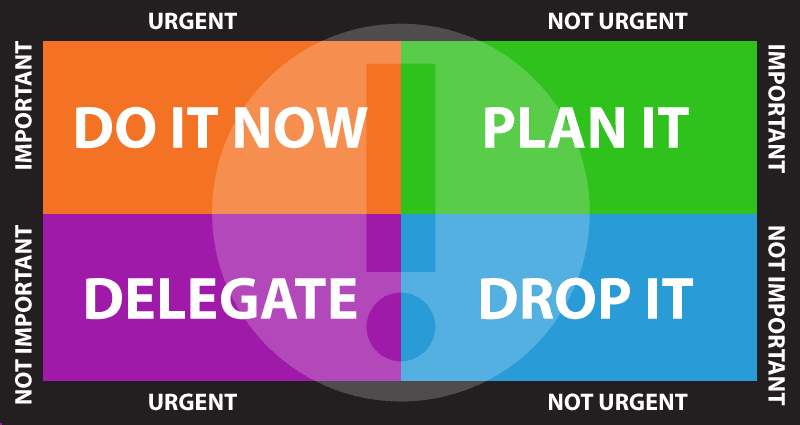
What to do when there’s never enough time to get anything done.
There’s never enough time to get anything done. Between meetings and coffee breaks, conversations with co-workers and email distractions, the day seems to fly by and you never quite accomplish what you want to. Well, you’re not alone. And that may be part of the problem. In theory, bringing employees together for 8 hours a day, 5 days…
Answering the Indirect Question
One of the more intriguing credit union marketing problems we encounter is “what should we do with all these indirect members”? To be clear, we’re talking about members who have joined the CU by getting a car loan at a car dealer. Many times, they have only the base savings account and the car loan,…
Unintended consequences can be damaging
When Marketers don’t pay enough attention, unintended consequences can be especially damaging. If you don’t believe me, look at the public relations fiasco United Airlines has been experiencing lately. Those standardized terms probably looked reasonable to those in charge of herding passengers at United, especially since all the major airlines use similar wording in the fine print that accompany ticket sales.…
Credit Union Science Fiction
Forget next year’s media budget or your five-year strategy. Let’s gaze deeper into that CU crystal ball than we ever have before. What’s the distant future of finance? What are credit unions going to be doing 25, 50, or 100 years from now? Virtual CUs Correct me if this has already happened, but is there…
Eating the Elephant: Economic Upheavals
There’s a silly old joke that goes something like this: “How do you eat an elephant? One bite at a time.” In this series, we’re talking about taking a bite out of some of the “elephants in the room” – big, obvious, uncomfortable problems that everyone’s trying to ignore. We’re hoping to inspire credit union people to…
Eating the Elephant: Health Care Costs
We all know the expression “the elephant in the room”. It’s a big, obvious, uncomfortable problem that everyone’s trying to ignore. In our “Eating the Elephant” series, we’ll take a good hard look at some of the elephants jostling credit unions and their members. We’ll also discuss some ways credit unions could play a role in taking…
Minimalism: Love people. Use things.
Last summer my wife and I were partially successful at simplifying our lives. We moved from a 3000 sf home in suburbia to a 1700 sf condo in the middle of town, cut out 40 minutes of drive time and replaced it with a 10 minute walk to work along a fitness trail surrounded by a…
What CUs can learn from Sarah Silverman
If you haven’t seen the latest Sarah Silverman video about moving her money to a credit union, you might be living under a rock. I’ve seen almost as many social media posts and reposts about #bankexit as political posts. Okay, that might be an exaggeration. There’s still far more political posts in my social media. And of course the video…
What I’d like to know about blockchain
Like everyone else in the credit union world, I’m a little tingly these days about Blockchain technology. It’s also, and possibly more properly, known as Distributed Ledger, but I suspect the short punchy term “blockchain” has already won. I’ll skip yet another explanation of what blockchain/distributed ledger is — there are many definitions and imaginative…
Web Accessibility? It’s Not So Scary.
Accessibility is on everyone’s mind lately — we’ve fielded a lot of questions recently from our credit union clients about web site accessibility and ADA compliance. It’s a big and technical topic, but where do you start getting a handle on it? Check your Attitude Accessibility is not a “yes” or “no” question, a switch…
What will your next website look like?
Several trends in website design are drastically shaping how sites are experienced by users. It’s no wonder why so many Credit Unions are updating their sites – even those that are only 2-3 years old. And if yours is older than 5, well, you probably already know how out-of-date it feels. What IS the fashionable website wearing these days? Or, for…
Thank you for the marketing!
What if people wanted to see marketing? Seriously. What if the state of the art in creating and targeting online marketing messages was so good that people would turn off their ad blockers, and eagerly await the flood of fresh, funny, interesting, valuable, relevant, educational, and informative content? What if your mailbox contained stuff you actually…
In order to show that it can be done.
My guess is that the prof needed an example of someone that survived a graphic design career. You know, in order to show that it can be done. At least I assume that is why I was invited back to my old college last week, to chat with a class of Juniors. It was an interesting process…
Five Ways to Squeeze the Most Out of Your Marketing Agency
If your marketing budget is like those at most credit unions, we know you have to pinch every marketing penny until it screams. That’s why, as a service to our clients and potential clients, as well as to our colleagues in the creative biz, we’ve put together a few tips on how to squeeze every precious drop…
Snap decisions may only be worth the time they take
We’ve all heard that more and more consumers will abandon your website if it takes too long to load. Depending upon who you ask, a one second delay can result in 11% fewer page views, and every second it takes encourages more visitors to bail. Malcolm Gladwell’s book “Blink: The Power of Thinking Without Thinking“ explores the idea that snap decisions may…

The Call of the Mild: What introverts can do that extroverts don’t
Let’s say it’s your task to hire someone to lead a team of professionals doing challenging work. All else being equal, are you going to pick the extroverted “people person” or the quiet, thoughtful introvert? Extroverts never seem to be at a loss for words, and always have a story to tell. They’re relaxed and comfortable…
What’s next in CU web design
Every once in a while, I like to polish up the ol’ crystal ball, put on my shiny prognostication hat, and peer into the mists of the future. When we build a new credit union web site, we always try to look ahead and build the site for what’s coming next. It’s a Mostly Mobile World…
Most of the world has no idea who you are.
Credit unions, I hate to be the one to break this to you, but most of the world has no idea who you are. That may be a surprise to you since you live in the CUniverse. When immersed in the credit union culture, when you deal with the same coworkers and members most of the time, it’s too easy to…
New Year’s Resolution: Kick Some “BUTS”
You have an amazing idea that gets you feeling so pumped that you have to tell someone else before you explode. Everyone you tell gets so excited they tell others, and suddenly everyone is buzzing, brainstorming, and building on the possibilities until they begin to feel probable. At least until a great big “BUT” pops up. “What if our web site DIDN’T look like…

Free Shared iDiz Books
Back when we started Shared iDiz in 2007, our concept was simply to chat with those working in credit union marketing. We wanted to provide insights, share expertise, challenge unproductive thinking, celebrate fresh viewpoints, and hopefully keep it interesting and fun to read. It’s apparently a long conversation, since we are headed into our 10th year of Shared…

Year end web site checklist
Before you launch into all the exciting stuff you have planned for 2017, it’s worth taking a few minutes to make sure your web site is ready for the new year. Do you know where your domain names are? Make sure you have a list of all the domain names your CU owns and that…
When you see a bubble, pop it.
If nothing else, the 2016 election has made one thing very obvious: many of us live in a “information bubble”, where we only pay attention to information that reinforces what we already believe. These bubbles, together with the speed and reach of social media, created an unprecedented opportunity for fake news — just create a…
The CU vault of horrors
Stuck trying to come up with a costume idea for the credit union office party? Here are a few grisly ghouls you wouldn’t want to meet in a dark and lonely branch hallway. Grumpy Gertie the Zombie Member She’s not a ghost just yet, but she is often seen shuffling through the branch, making horrible…

If you work in marketing, are you being paid to lie?
I believe in honesty. Not just in my personal life, but in business too. Of course that might be difficult for some people to believe since I work in marketing. After all, it’s a business I’ve heard described as “being paid to lie.” And, I know it’s hard to believe, we’ve had clients who wanted us…
Don’t forget to breathe.
It’s October, and the world seems to ripen around you. Reds, oranges and yellows pop out overnight against the darker green leaves of trees that aren’t in such a big hurry, while squirrels try to get a little fatter with every walnut they crack open. It’s the best time of the year in the Midwest.* The air is a…

Choose to be worth it.
They say that in the race to the bottom only one person wins, but I’m not convinced that anyone actually does. We still see credit unions claiming they “do everything a bank does, only cheaper.” Okay, they don’t normally say “cheaper” in their marketing, but they do usually brag about their lower loan / higher savings rates. They also…
Thinking big. Really big.
Every so often, I think it’s a good idea to think big. Really big, like on a macroeconomic level. What’s our species up to, anyway? I’m not always sure where I fit in or even where credit unions fit in, but here are a few of the big, fundamental things I’ve been thinking about lately.…

If Big Blue can pivot, so can you.
When asked to think of an agile, design-focused business, Apple or maybe Tesla probably come to mind. IBM probably won’t – but maybe they should. Having invented everything from mag stripe cards and the ATM, to floppy disks and disk drives, UPC barcodes and SQL programming, IBM has been the prototype Big American Corporation almost since it…

Are you an Amazonian or a Walmartian?
It’s always interesting to compare credit unions to well-known “disruption” companies to see if there’s anything we can learn from their examples. Walmart and Amazon have massively disrupted retail, along with entire industries and communities. Love them or hate them (or both), their effect on the world has been huge. In addition, they are direct competitors…
Rebranding: partial polish or total transformation?
Once the Board is on board with rebranding, the question soon becomes “how far should we take it?” For some, a rebranding should be more about refinement than reinvention, a partial polish over a total transformation. Others would prefer the more extreme approach, looking for a new name and a new beginning in order to create something fresh and amazing. How do you…
Helping the not-so-ideal credit union marketer
In my last article, I outlined the attributes of the Ideal Credit Union Marketer — an empowered, invaluable, brand-savvy communication dynamo coordinating a turbocharged marketing engine that powers record growth. Let’s face it — that kind of perfection could be kind of annoying. And out here in the real world, the Ideal CU Marketer doesn’t…

Fitting in is the future of financial tech
Pardon me just a moment while I don my wizard hat and polish the ol’ crystal ball… yes, the swirling images are getting clearer, the clouds of possibility coalesce… I see… an average, mild-mannered credit union member. She glances at the flexible holo-phone wrapped around her wrist, smiles, taps twice, and continues with what she was doing.…
Rebranding: throwing Baby out with the bathwater?
Rebranding is all about getting to the core of who you are. When you strip away all the products, branches and systems, the underlying purpose, heart and soul of the credit union is an optimist’s belief in people helping other people, making the world a better place. There is an emotional connection there that other businesses just…
There is an option to The Slow Fade.
Day after day after day, too many credit unions have kept doing the exact same thing they always have, for members they have always had. As a result, too many end up focused on trying to stay afloat with an aging membership and rising overhead costs, spending less and less money and effort on anything that can improve their future…
Where’s your Master Plan?
Elon Musk, best known as the CEO of Tesla and SpaceX, has a very interesting document on his company’s blog — the second half of his “Master Plan”. He’s achieved or is close to achieving the goals he laid out in the first half of his Master Plan, and he’s now working on the rest.…

Explaining the CU Difference. Again.
Every time I begin to think that people understand the difference between credit unions and banks, I keep getting reminded that it isn’t as obvious to the average person. Of course you know why CUs are great — you’re soaking in CU goodness. But you simply can’t assume that consumers have any idea what a credit…
Disruption tattletales
You generally see one of two reactions to any disruption: people who want to find out more and maybe get on board, and what I call "tattletales" -- people who want to find any reason the disruption violates some principle or law, and they just want it to go away.

Widgets, wearables, watches, and things
We're only in the very early stages of a flood of interesting and cool capabilities enabled by "IoT" devices. Credit unions can be a vital part of the IoT revolution and develop even closer connections to members by making smart choices and sticking to their core principles.

Five Big Ideas for transforming your CU
It’s a tough time to be on the smallish side as a credit union. It’s getting harder to compete with larger FIs of all stripes, and it’s tougher to stay in the black while offering the same things everyone else does. Maybe THAT’s the problem. You don’t need to offer everything to everybody, especially what…

Drop your pants and dance
After the MAC conference in Las Vegas, my wife and I decided to stay an extra day and see the sights. Among many other weird and wonderful things and people, one of the sights we saw on Fremont Street was this magnificent rendition of cupid. Some people just sit there with a sign and beg, but this…
Your approach to problems: Caddyshack? Or Whack-a-Mole?
Some days you have one problem that just won’t go away. No matter how hard you try, how determined your approach, the problem always slips away at the last moment, which can leave you as crazy as Bill Murray’s character in Caddyshack. Other days, problems seem to come up one after the other, another popping up immediately…

What happened in Vegas
Last week, I attended the 2015 MAC Conference in Las Vegas. As always, it was an incredible experience, as you would expect from gathering the best and brightest of the CU marketing field under one roof. The highlight, of course, was collecting two MAC Awards for logos we designed for Park View Federal Credit Union in Harrisonburg,…
Always pleasantly surprised
One of the great things about working with so many different clients all over the country is the variety. I am always pleasantly surprised by the talents of new clients, mostly because I never know what to expect. Some are very outgoing people, others not so much. She is very logical and analytical, he is…

Stop making things so gosh-darn hard
Why were these tasks so onerous? Last night (and early this morning) I helped my wife activate a new cell phone. A couple of weeks ago, I finally signed up for BlueIndy, an electric car sharing service. Last year, we refinanced our mortgage to take advantage of a lower rate. I tried to order a pizza…

Collaborate to reinvigorate
White Sands Federal Credit Union (based in Las Cruces NM) was planning to launch a new logo in a few months. Their internal design staff had designed their new logo and brand colors, but they wanted help translating the new look into the real world with an updated website and print materials. It was also an opportunity to…

Sometimes shorter is better.
International Harvester Employees Credit Union faced a problem many credit unions have; their founding SEG no longer existed under the same name. SOLUTION: iDiz was hired to research staff and member feelings on the existing name and collect suggestions for new names via an online survey. Even with favorable survey results and name suggestions, many…
Five ways to make a small CU roar
According to this article by Glenn Christensen on CU Insight, small credit unions are notably less efficient with their marketing dollars. The numbers are gloomy, but not all that surprising. After all, the cards are stacked against the pipsqueaks in many ways, not just limited budgets — marketing time, attention, money and (dare we say it?) talent are all…
Everyone has an opinion
Ask for an opinion and most of the time you’ll get one. As a creative person, you are probably used to getting opinions all of the time — from your boss, coworkers, possibly even clients. Sometimes you’ll get useful, constructive insight that gives you the chance to improve, that helps you turn what you are…

Think big. Now think bigger.
If there’s one thing I wish I could shout into every credit union marketer’s ear, it’s this: “THINK BIGGER!” With every project. Every product, every campaign, every thing you do, every step of the way. It will make all the difference in your results, your experience, and your success. Think about the biggest possible picture…
Have a confession to make?
Confession of your sins is good for the soul, and an important part of Catholic tradition. And confession of your financial “sins” is a great way to start a conversation, learn from mistakes, and become more financially savvy. Catholic Federal Credit Union, based in Saginaw, Michigan, decided to have a little fun with this tradition. We created a…
Innnntroducing…Rent-a-Brain!
Are you responsible for too many initiatives, an overabundance of priorities, an excess of tasks at hand with way too few fingers to get it done? Are you a slam-packed, schedule-smacked, shell-shocked, docket-pocked shell of your former self, trying your best to appease particularly pesky purveyors of arbitrarily outrageous deadlines? In short, has the fun…
How to spot a silo
Departmental silos are still one of the biggest problems at credit unions, and I am always surprised when a CEO is unaware of them. Maybe it is because I grew up around small rural midwestern towns. Every day you would see silos outlined against the sky, dwarfing the other farm buildings. It was common knowledge that these tall, windowless tubes…

Not your Grandma’s Credit Union
PROBLEM: Harvester Financial is a small credit union that needs to grow. The manufacturing plant where they started had been closed years ago by their original SEG, which itself had been sold and merged into another company. Even with mergers membership was aging, and the credit union wanted to update their image in order to bring in younger members. While their…

Content Marketing is all about the conversation
Everyone loves a good story. Numerous studies have even shown that our brains respond more to stories than cold, hard facts. That’s probably why stories have been a primary Branding & Marketing tool since, well, forever, and why they became a priority once content marketing and social media took off. After all, someone has to fill all that space. It’s not…
Consuming life, one chunk at a time.
Our life is fragmented. Our attention span is short. Our phones have become permanently attached, which means we are always accessible to the world, with tech (Twitter, Facebook, Snapchat, Instagram and email) just a tap away. Life keeps us moving, pulling us this direction one minute, another direction the next, only leaving time to consume…
When it comes to budgeting for web sites, you’re doing it wrong.
When it comes to budgeting for web sites, you’re doing it wrong. Here’s why: Your website is more visible than your branches. Your website gets 10 times more traffic in a month than any branch, with members logging in multiple times to pay bills, check balances, and transfer between accounts. Even non-members check your site before coming in…
What ad agencies and credit unions have in common
Ad agencies have a real problem; they don’t like being called ad agencies. For most of the people working in the industry today that term should have been left behind, maybe as far back as in the ’60’s (especially once it was overly-romanticized by the TV series “Mad Men”). But if nothing else, that show has shown the enormous changes…
Video is eating the internet (and how to get on the menu)
There are 300 hours of video being uploaded to YouTube every minute. Cisco tells us that by 2019, video will be 80% of all consumer internet traffic, up from 64% in 2014. Video on demand will double by 2019, with over 70% of that HD. Thankfully broadband speeds are supposed to double in that same time…

Does your marketing calendar pass the Google test?
It’s human nature to keep doing the same thing year after year, and Credit Union marketers are no different. CUs tend to push home equity loans in the Spring, car loans in the Fall*, and Visa cards right before the holidays – because they always have. Now if that sounds like your entire Marketing Plan, then you should probably bring in some outside help. In…

More Bang for the Buck: Bricks or Clicks?
Brick and mortar branches certainly aren’t going away. You’ll always need face-to-face interaction with members. But in-person service isn’t cheap – in 2014, the average credit union branch cost over $2 million to build and equip. Even buying and refurbishing a closed branch of a competitor won’t save a lot of that cost. Sure, you…

It’s hard to read the label from inside the jar.
It’s obvious you’re different. You have the best staff, the best products, the best rates, and no one else is so completely devoted to their members. Absolutely no one can compare to you, and, frankly, you should have members willing to pay extra just to get in. Of course, you’re on the inside, looking out. When everyone else reads…
A great web site is a process, not a project
Your new, fantabulous, mobile-friendly website is launched, the accolades are pouring in, and your CEO is beaming like a proud parent. Time to relax with a few margaritas, declare victory, and move on to something else, right? Wellllll… sort of. With a brochure or newspaper ad, you know there’s an end point. Once the ink…
How to manage creatives without crushing them
Creative people are some of the most frustrating, talented, nerve-wracking, and amazingly wonderful people I know. And I should know, having worked with, hired and managed a whole bunch of them over my career. So when a CEO recently asked me how I was able to get them to do such great work over so many…
I’d rather have the dirt shower
If you’re a motorcycle enthusiast, MotoGP weekend is a great time to be in Indy. In case you didn’t know, MotoGP is the premier international motorcycle race series, similar to Formula 1 for cars. MotoGP means the absolute best riders in the world and the absolute latest and greatest in motorcycle technology. And since 2008, one of…
Everyone wants my opinion, but no one respects my time.
I understand why a “please review our services” approach has become the norm for customer service departments. Generally, any chance of opening up a conversation with a customer is a good thing. But not when it feels preprogrammed, a meaningless step in a never-ending sales cycle. Just look at my yesterday: I bought some clothes at the store and the…

CUs: people are searching for you, not your products
Here’s a remarkable little fact about organic search that is specific to credit union websites: Well over 99% of the clicks coming from organic search are simply variations on the credit union’s name. (For example, “ABC Credit Union”, “ABCFCU”, or “ABC CU”.) In other words, people who find credit union web sites via search are very consistently searching specifically…
Four facts that may rock your world
Plenty of CEOs and Boards act as if nothing has changed in the 70+ years since their credit union was founded, and that it will probably continue along as it has for another 70+ years. (Insert mental pic here of CEO with feet up on desk, eyes half closed.) I’d tell them they might not want to get too comfortable,…
Those pesky misbehaving humans
I’m currently reading a very interesting new book called Misbehaving: The Making of Behavioral Economics by Richard Thaler. Thaler is an economics professor who became inordinately interested in those curious, messy, illogical, maddening creatures called “Humans” sometime in the ’70s. Economists then – and now – prefer to deal with the far more predictable actions of rational, logical beings.…
What if you weren’t allowed to buy what they were selling?
Have you ever felt like you weren’t allowed to buy what they were selling? About a week ago my wife and I were wandering around downtown Asheville with our NC friends. One of our group was excited to see that a small “Scottish” shop was open, since she had tracked some of her ancestry to…
Language lessons
In many parts of the US, a significant portion of the people speak another language. Even if these folks are also fluent in English, using a “native” language can be a great way to connect and build trust. Here are a few recommendations for developing and maintaining multilingual marketing materials and websites: Use professional translators,…
Emotional escalation
Long ago (but not so far away) I worked at a mental hospital while I was finishing college. And I loved it – the job was incredibly interesting and challenging. Endless variety every day, and a lifetime of great stories. Of course, I learned a lot of things doing that job that I still use today, one…
Marketing is too important to be left to Marketers
Marketing has traditionally been the domain of a few creative people in your organization, whose work is sometimes appreciated (and sometimes tolerated) by the rest of the staff who tend to have no idea what marketing really does all day. Well, nothing against your Marketing Department, but marketing is too important to be left up to just them. And, by the…

Your brand deserves more than Not Horrible.
As a Creative, you brainstorm, write, rewrite, design, rework, and generally put your heart and soul into your work. You fixate on building your brand to be one-of-a-kind, and have probably spent the last several years telling people how different you are from your competition. You’ve likely spent hours and hours searching for just the right stock photos, and in the end…
How to choose and work with a pro photographer
For those of you that have been stuck in StockPhotoLand for most of your career, here’s a nuts and bolts lesson in how to choose and work with a pro photographer, what to expect, and how to get the results you need: 1. Build a plan. Get a good sense of what you want and need before…

InfiniBudget 9000 to revolutionize marketing as we know it
Time and time again, we hear the same laments from our clients: “We just don’t have the budget!” “I’d love to do more marketing, but the CFO doesn’t believe in ads.” “My nephew’s class said they’ll build our web site for three large pizzas.” “The CEO says we need to work smarter not harder, pull ourselves up…

The future of credit union website design
Credit union websites are a breed apart. You’re not selling widgets, you’re not providing entertainment or news, and you’re not collecting clicks for cash. Your site is a place busy members go to get things done. So how do the latest trends in website design and technology affect credit union websites? Touch devices make scrolling easier than ever…
In-house, or outsource? 3 ways to tell.
Credit unions, like many companies, go through times of tightening budgets and cutting back on outside expenses. Marketing is often the department that feels the biggest pinch. Occasionally some interesting management logic occurs, and more personnel can be added because the HR budget is a different line item than Marketing. (I never have figured that one out.) But…
Brainstorming brainstorming
It’s time for yet another loan promo and you’re stuck looking at a blank piece of paper. You’ve got nothing. Nada. Zilch. Zip. You could really use the collective input of multiple minds, riffing on anything that pops in their heads, all focused on a single subject. You need a brainstorming session. But everyone else around the office seems…
Maybe it’s time to ditch the RFP
Let’s say you have a big, important project, like a website redesign or a brand refresh, and you need to hire a vendor partner. So the thing to do is send out a Request For Proposals (RFP) to every company that you can find, then just sit back, wait for the responses, and pick the…
One million seconds is HOW long?
Most people are lousy with numbers. Especially big ones. Numbers like millions, billions or trillions are simply hazy notions of REALLY big numbers for most people. Add a dollar sign in front and you may actually see their eyes glaze over. Unless you put those numbers in terms they understand. For example, everybody knows that a minute is 60 seconds,…

Millennials: No Car, No House, No CU Income?
My youngest son sort-of-hates cars. Sure, Grandma’s-hand-me-down-Buick helps him get around town when he comes back to visit family. But that’s also a big reason why he plans to always live in a city with a decent mass transit system. He doesn’t want to own any car, or make monthly payments for it, much less pay for the gas, insurance, and upkeep.…
How will you change the world in only 5 years?
I’ve always been amazed at how the Beatles completely changed America’s taste for music in just 5 short years. It was a culture shift that hasn’t been equalled since. Now, I admit I’m a huge Beatles nerd. I was just a kid when they were in their heyday, but I discovered their music in college and still listen to them…
Take an active role in member security
When we build a credit union web site, we get a lot of security questions related to compatibility with older browsers. Depending on who you ask and what numbers you believe, somewhere between 2% to 8% of the general public is still using very old versions of Microsoft Internet Explorer. Naturally, credit unions don’t want to leave…
Big decisions are more successful when everyone understands WHY.
When it comes to big decisions, some people seem to know what to do. They understand the need for a change, and they take it as their personal responsibility. They take the lead, build consensus, and make it happen. What I don’t understand are people that let others decide for them. Especially on big decisions, the type that could mean…
Money isn’t everything – budget time and attention too
What’s your total marketing resources? No, not just the number of dollars you spend on media, services, and clicky pens. I’m talking about the other parts of the equation: time and attention. Time + attention + money = total resources. Time, of course, is a combination of staff time (how much time can and should you…
5 New Year’s Resolutions we dare you to make
Every New Year we make resolutions to improve our future; go to the gym, lose weight, get a raise, take that dream vacation, finally pay off the credit card…you know the drill. Lists are written and promises are made (mostly to ourselves, and mostly forgotten within a few days.) But what if your department did it as a group? What if everyone resolves to…
Here’s a stat for your CFO at budget time
We’ve been preaching for years that Marketing should drive the bus, not just go for a ride in the back. Now there’s a statistic that may actually get your CFO and CEO to pay attention: Ten years ago, if you had invested $10K in design-centric corporations you would have outperformed the S&P Index by 228%. That’s right. According to the Harvard…
Name Change Step #1: Getting the CEO on Board
Whenever an organization thinks about a name change, there are lots of emotions and memories that surface. Sometimes those emotions and memories can even become obstacles. Some are relatively minor and are easy to get around, but others can turn out to be insurmountable — especially when they occur at the highest levels. That’s why one of the first questions we ask our clients…
Meh boss? Maybe it’s you.
You may actually have a lousy boss and work in a toxic environment. If so, then you should run, not walk, to the nearest job exit. But if your Boss is basically okay, yet your job seems to be going nowhere and you don’t seem to get the opportunities you say you want, then it may not be the…
Five things no one will tell you about web site security
Security sells, so there’s no shortage of security advice, products, and scares out there. I’ve noticed that most articles on the topic of web site security seem to leave out a few important points as they clamor for clicks. So here are five things no one will tell you about website security: Having the right team…

Does your marketing department deserve more respect?
Your in-house marketing department is likely made up of capable, well-qualified and talented people, yet it may feel that you never get any respect from management or the rest of the company. You seem to get stuck doing all the small, tedious jobs while outsiders are brought in for the big, important projects. You obviously…
Five uncommon reasons to rebuild your web site
It’s sad to say, but nothing lasts forever – especially not web sites. Even if nothing is particularly wrong or broken, changes in technology and usage make it worthwhile to revisit your online “front door” every few years. In our experience, web sites need to be refreshed every three to five years. You can probably think…
Does Marketing drive or go along for the ride?
There are two types of marketing departments: those that drive and those that are passengers. Those that drive understand that Marketing revs the growth engine. Those that simply ride along only go where the driver takes them. Unfortunately, most marketing departments seem to fit in the second category. How about yours? Where do you sit? If you aren’t sure, see if…
Invisible excellence
Last week, I spent a few days motorcycling with some good friends in the beautiful hills of southern Missouri. The Ozarks contain some of the finest riding on the planet — this area is absolutely stuffed with thousands of deliciously sinuous roads. If you’re not a rider, this next bit may seem odd… What impressed us above all else…
Five signs I might actually be growing up
Does anyone really think of themselves as a grownup? I’m definitely an adult, but I still see myself as a kid. I still make dumb mistakes, I still say stupid stuff, and I still wish I had more social finesse. I sometimes wonder out loud what I’m going to be when I grow up. And…
Too many home banking sites, too little time
Between the business, our personal accounts, my mother’s finances, and another organization, I work with accounts at 2 credit unions, 3 large banks, and one regional bank. Which means I have the pleasure (?) of bouncing between SIX different Online Banking websites. I’m a graphic designer by background, not an accountant, so I’ve found the experience challenging,…
If everyone hates stock photos, why do we see so many of them?
I see three reasons why “shiny, happy people” stock photos are so prevalent: 1. Because they solve a problem quickly. You need a visual image that helps to communicate an idea, there seem to be mass quantities of them available, and if you ignore the time it takes to find the “right” one, they are a speedy way to complete your layout…
Why is the destination more important than the journey?
I spent part of last weekend walking the Freedom Trail in Boston. It’s a double wide red brick trail that leads tourists through many of the highlights of historical Boston where our national history was made, including the site of the balcony where they read the Declaration of Independence to the townsfolk (as well as…
Dare to be human
Go take a look at the web sites or marketing materials for a few extremely large companies. Take your pick — banks, car makers, restaurants, retailers, or manufacturing. Check out their social media postings. Where are the people? The real people, not the retouched unrelated models portraying the Perfect American Family. With very few exceptions, you won’t…
How to turn your CFO into Marketing’s BFF
Be honest. Are you BFFs with your CFO? Or do you have to fight for every penny and justify every expenditure? Ever been blindsided by a budget cut? The struggle between Marketing and Finance goes back to the days of cave painting, but it doesn’t have to be that way. It’s not that CFOs are bad people.…
United by a single shared interest
We always encouraged our boys to be true to their inner nerd. Why? Because nerds rule the world. More importantly, nerds also use their imagination in creative ways, often becoming absorbed in thoroughly exploring one interest after another. Growing up, my boys went through multiple phases where they were obsessed with one thing or another, from collecting Beanie Babies, to Pokemon…
Is Free just another word for Not Worth Paying For?
Credit unions have long championed giving certain services away for absolutely nothing: free checking, free bill pay, free ATM access, free shared branching, etc., etc. But are free services appreciated, or pretty much just expected? As designers and marketers, we get hit up all the time for free work. This charity needs a logo and this non-profit…
No more lousy CU names
Too many credit union names sound like they were decided by a committee of accountants a long, long, long time ago. In fact, that’s exactly how most of them got their names. Add in the fact that every credit union name has to drag along the words “Credit Union” or “Federal Credit Union”, and you’ll start…
Can you taste the local difference?
Last week, I noticed a cool new package in the freezer at the grocery store. No-nonsense, retro-yet-high-tech, and irresistible next to the generic plastic bags. Priced only a little bit higher than the generic sweet corn from who-knows-where. What it contained was sweet corn. Indiana bicolor sweet corn. I visited the company’s web site (huskfoods.com),…
How to control deadlines instead of letting them control you.
You know that you have that one project to do, and it needs to be done NOW. It’s there, hanging over your head like the black cloud that always followed Joe Btfsplk* around Li’l Abner strips. But you don’t really want to do that project. Maybe it’s too difficult, looks like it will take too long, or you just don’t…
Why do so many CU websites look like garage sales?
Advertising banners squeezed in everywhere, blinking, flashing, rotating, and screaming for attention. Dire warnings about phishing and hacking appear but never seem to go away. Hundreds of words crammed into every banner and every available space. An urgent notice about last year’s annual meeting. It’s enough to shock anyone into clicking through to home banking as fast as possible,…
Are my brand colors special enough to trademark?
This weekend my wife asked me to pick up some Excedrin when I went to the store. As I was putting the package in my cart, I realized that the package I picked up didn’t actually say Excedrin on it. It had the exact same color scheme and layout, but a different name. That’s when…
CEO to CEO: Marketing is either your baby or your fault
The Boss’ attitude and approach towards Marketing is usually the biggest difference-maker in obtaining highly successful results. Those that understand that good marketing is a wise investment, not an expense, do pretty well. Those that understand that GREAT marketing is an INCREDIBLE investment do even better. That’s why I wanted to share my recommendations on…
Creativity: Calvin and Hobbes Style
Last weekend I visited the Ohio State campus in Columbus Ohio because of a comic strip. Not just any comic strip, mind you – the comic strip that redefined comic strips; Calvin and Hobbes, created by Bill Watterson. Watterson’s genius was in combining the self-absorption and fun-loving mischief of Calvin with the snarky wit and self-awareness of…
Innovative Ideas to Increase Loan Growth
No matter how big or small your credit union, whether it’s SEG or community based, every credit union marketer is searching for new ways to encourage encourage loan growth. Loans are an obvious choice because they’re both profitable for the credit union and fulfill a substantial member need. Download our free white paper to learn…
Brand Loyalists are wimps. Build a Legion of Brand Fanatics.
Sure, Brand Loyalists boost your bottom line, talk about your brand, recommend it to their friends, use it on a daily basis, even teach their kids how to use it. And most companies would be happy to have them. Not me. I think you can do better. I think you can build your own legion of…
Taglines are like short stories that no one understands.
Taglines may be the most difficult part of branding. And provide the least value. Why? Because a tagline has to convey as much meaning as possible in as few words as possible. Brevity usually trumps content, turning what was once a meaningful thought into corporate jargon. Don’t believe me? Take a look at The Financial Brand’s…
No pain, no change
As you might remember, I broke my left leg and right arm last November in a collision with one of Bambi’s errant relations. (More of that mournful tale). I’m recovering quite well, but I’ve been attending physical therapy for the last few weeks to rebuild strength and flexibility. Naturally, I’ve started thinking about what else…
The Rule of Three Rules
Your focus group and creative team has come up with 47 different ways why your your credit union/your product is superior to the competition. Your eyes glaze over at all the possibilities, that by using this amazing list in your marketing, you will astound the world with its obviousness, bring in monster results, and probably…
Is Your Marketing Worthy of a Sequel?
I recently watched 3 movies in a row (the only way to fill time flying across an ocean), and the best one was Despicable Me 2. It was simple, mindless entertainment that made me laugh out loud (which meant I got some funny looks from other passengers.) I assume it was my memories of the…
Go find some weirdos
Quick, tell me about your members. No, not the average members. They’re boring. And you already know plenty about them. And so does everyone else. Find some weirdos. People out on the fringe. The ones who were in New Guinea last week, and are currently somewhere in Kazakhstan. The family thinking seriously about what kinds…
7 cliches way past their expiration date
I understand that when a phrase gets repeated enough, it can become a cliche. It can also become part of company’s culture – serving as a form of shorthand for CEOs and office managers – especially when anyone is talking about branding and marketing. And while cliches may have started out as a new way…
The pain isn’t enough to make the switch
About every week someone calls us “on behalf of AT&T” to try to give us a better deal. We just hang up on them. Why? Because it’s painful. They’re third party resellers, and their “deals” are almost as confusing as the those from AT&T. Why AT&T seems to be actively supporting them, I have no idea. …
Is your brand in the cart, or still sitting on the shelf?
You’ve seen products on store shelves that look like they have for the last 20, 30, even 50 years. They’re dusty, and a bit worn around the edges or label because they keep getting shoved around the shelves instead of taken home. Unfortunately, your credit union’s brand may be looking a lot like that dusty, battered…
Creativity: only the story we want to hear?
I’ve always been high on creativity. My whole life has focused on the well-designed, the interesting, the entertaining, the cleverly crafted. I read a lot of books by others in the creativity field, from small nuggets of marketing insights to essays to way-too-many-page tomes on the subject. I enjoy watching TED talks to see how…
Would your members pay a premium?
We’ve written before about the idea of charging for CU membership – what you’d have to do to make yourself feel like an exclusive club worth joining, a la Costco and Sam’s Club. We know people will pay club membership fees – AARP, AAA, social clubs, professional associations – as long as they feel they’re…

If you work in advertising, are you “being paid to lie”?
I believe in honesty. Not just in my personal life, but in business too. Of course that might be difficult to believe since I work in advertising/marketing. After all, it’s a business I’ve heard described as “being paid to lie.” And trust me, we’ve had clients who’ve wanted us to do just that. Mostly though,…
What if your credit union isn’t the best financial option?
I know that CUs are great, and for most people they offer a much better deal on almost anything financial-oriented. But for most credit unions, you simply can’t offer everything to everyone and do it all well. You may be able to go after more business accounts now, but you may not have a very…
Dream big for your next community event
ArtPrize is a chaotic, jumbled mess of classic and pop, amateur and professional art surrounded by mobs of people and spread out over (mostly) downtown Grand Rapids, Michigan. It’s creative, kitschy, classy, unorthodox, and I loved every grass-roots moment of it. For 19 days every year, Grand Rapids turns their downtown into an oversized art…
Mission Statements are boring. What’s your Manifesto?
When we start on a branding project, one of the first things we usually see is the credit union’s “Mission Statement”. About 99.999% of the time, a committee has very carefully stripped it of any concrete meaning or use and it says the exact same things as every other mission statement. What I’m more interested…
Are you telling stories or storytelling?
My brother-in-law tended to exaggerate things a bit when he was a kid. From what I hear, there was always some truth behind his tales, but it was the embellishments that made everyone grin and shake their head. His family knew he wasn’t lying, he was “telling stories” – which, of course, isn’t the same thing…
Is your home page a welcome mat or a clown car?
I challenge you to go to a site you’ve never visited before. To make it even more random, ask a coworker or friend what their favorite site is, and go check it out. Now I’d like you to be objective and ask yourself the following questions as you look at the home page: Does it…

Five things to expect when building a new web site
Since we build new websites for credit unions all the time, we’re pretty familiar with the process. But most of our clients are only involved in a website project once or twice in a decade. Sure, it’s exciting and exhilarating, but it can also be exhausting and unfamiliar. Here are five things to expect when…
If I weren’t in Marketing, I’d probably be…
I never thought I’d be creating marketing for credit unions when I was growing up. I had no idea what advertising was, or a logo, or that people got paid for designing the cereal boxes I looked at every morning. Heck, I didn’t even know what a graphic designer was when I went to college.…

Incredibly bad marketing advice
We’ve always tried to give you good marketing advice in order to help you grow your credit union. But where’s the fun in that? Besides, it’s late, and I want to go home, so here is some incredibly bad marketing advice instead. Enjoy. 1) Your logo isn’t sacred. Tweak it as much as you want.…
Would your members pay for your marketing?
What’s that you say? Pay? To receive our direct mail, emails and statement inserts? Uh, I don’t think so. Okay, then let’s look at this a different way. Would your members be willing to pay, say $5, for some information that would teach them how to save $50/month on a car loan? Absolutely. Over the…
The epic battle between Marketing and Accounting
Some things just don’t mix: Light and dark. Fire and Ice. Marketing and Accounting. But why has there always been this constant struggle between the two sides? Why does Marketing see Accounting as a miser with an iron grip on the budget, while Accounting sees Marketing as a wasteful spendthrift with no sense of ROI?…
You assume too much
You have a wonderful product that is going to revolutionize the way things are done. It’s fun to use, easy to use, and doesn’t cost a lot. You’ve been talking about it with all of your friends, and they’re super-excited about it. So you refine the product, put as many resources as you can behind…
Being “in the know” makes you feel special
During Prohibition, speakeasies were supposed to be secret. You had to be “in the know” or know someone, in order to get in the door. Today, prohibition may be long gone, but speakeasies aren’t. There’s a speakeasy in East Village New York that’s hidden behind a phone booth in a hot dog joint. You heard…
No More Crappy Websites
We’re going to be very, very blunt here. Way too many credit unions have crappy websites, and frankly, we’re tired of it. • Potential new members are Googling your credit union and looking at your website. They want to get an idea of what you’re like, and generally pick up your vibe without ever having…
Five things I believe about Quality in CU marketing
The benefits of high Quality and the pitfalls of low Quality are obvious for things like airplanes and motorcycles. Without Quality in materials, design, craftsmanship, and maintenance, people die. Although the risks aren’t quite as immediate or dire, Quality is just as important in our corner of the world, credit union marketing. Quality – and…
Five things I believe about Change
I’ve seen a lot of change in my life. As a preacher’s kid, we moved every few years — new school, new friends, new town. As I got older, my interests changed from bikes to cars, from boy scouts to girl friends, from high school hallways to college campus. After graduating, I moved from single…

The 1-2 punch is knockout marketing
Most people are not engineers, or scientists, or accountants. They are emotional, not logical. Heck, most people don’t even like doing math, especially when it comes to money. Put a dollar sign in front of a number or a percent sign behind it, and most people’s eyes start to glaze over. Behavioral studies using brain…

Build a Brand Strategy before a list of new names
When a Credit Union Board and/or Executive Team decides that it is FINALLY time for a name change, too often they make a major mistake: They start coming up with names. That’s a natural reaction, to be sure. After all, the people around the table certainly know the history of the credit union and have…
Taming the toxic client
In my last two articles, I discussed iDiz Inc’s perspective on Building the ideal credit union marketer and Helping the not-so-ideal credit union marketer. Now it’s time to dish up some dirt! With some people, it’s almost impossible to develop a productive business relationship. I’m sorry to say we’ve encountered all the red flags below,…

Marketers often don’t know what they don’t know
Those heart-warming, emotionally-moving ads you are running? Only about 19% of consumers notice them. You say your ads are more thought-provoking? 33% of the people may have paid attention. Are you more focused on creating well-designed, eye-catching visuals? You reached about 50% of your audience. If you truly want to get their attention, you have…
Registered trademarks: do you need one?
For many years, we’ve been working with a wonderful trademark attorney, Amy Wright, who has advised us and and several of our clients on the ins and outs of getting a trademark. We sat down with Amy and asked her to share her knowledge of trademarks with our CU marketer friends. ———————– Diz: Amy, why…
It’s not just a Name Change, it’s a Game Changer.
Download our free white paper, and you’ll learn how to survive and thrive when pushing the rebranding button: • Why your staff, members and Board need to be part of the process • How to work with outside experts to get the quality brand you deserve • Why you need to build a Brand Strategy…
Building the ideal credit union marketer
Over the years, I’ve noticed that our most successful clients — the credit union marketers who get the best results and make this job a lot of fun — have a lot in common. In fact, several years back, I started compiling a list of traits for our ideal client as a way to define…
80% of your credit union’s members are blood-sucking parasites
Okay, that may be worded just a bit strong, but it’s certainly one way to look at the idea that the vast majority of your profits (80%) come from a minority of your members (20%). Obviously this isn’t a new idea. Most CEOs & CFOs are well aware of the 80/20 Rule, and are among…
On ditching RFPs, picking brains, and drawing lines.
Is it really okay to pick someone’s brain? I recently met up with a friend who works at a local credit union to get his take on all the changes that CUs have experienced over the last few years. He listened to what I had to say, agreed with some of my observations, and challenged…
Divert domain disasters
Are you really good at something you’d rather not even do in the first place? Maybe you’re a champion dish washer, or a nimble-fingered diaper-changing ninja. I have the same problem with domain names. I’ve been building credit union web sites for a long time, and over the years I’ve developed a lot of unwanted…
I could never lie as a kid
I could never lie as a kid. At least not successfully. I was so bad at it, all you had to do was take one look at my face and you’d know. Every time I tried to cover something up, all I managed to do was get deeper in trouble. So I gave it up.…
How ideas happen: eureka! or slow hunch?
People love to tell stories, so it’s no wonder that most describe how ideas happen as an epiphany, a brainstorm or “Eureka!” moment, a brilliant flash of insight that seems like a “bolt from above.” Even the famous scientist Charles Darwin attributes his theory of natural selection to one such moment, and even described the…
Are you investing in high quality marketing or just throwing money away?
Are you investing in high quality marketing or just throwing money away? With creative work (concepts, copy, and design) it’s sometimes hard to tell the difference until you count the results. But creative quality is vitally important – excellent creative multiplies results, while poor quality creative can waste money and seriously damage your brand. So…
DDoS and web site security: what CU marketers need to know
We’ve had some questions from clients about DDoS attacks on credit union web sites, what they mean to their website’s security. Here’s what CU marketers need to know: What does DDoS mean? In a Denial of Service (DoS) attack, a malicious hacker or group of hackers attempts to overwhelm a web server with a huge…

Do a few things really, really well
It was a perfect St. Pete Beach day. Blue skies, white fluffy clouds that matched the sand, small crowds since it was also a Monday, and enough of a breeze that you didn’t feel the sunburn building. A great day and a great way to wrap up a vacation. Our nephew, a local resident, finished…
Are you DIY dizzy?
Credit unions have a strong DIY (do-it-yourself) ethic. It probably comes from the early days — every credit union started as a home-grown effort. The cigar box in a desk drawer became a shoebox in a closet, then the CU moved into an unused office near the break room, and, well, the rest is history. For…
Are you defending your pain?
Life is full of annoyances. Everyone of us has something that has been nagging at our brains, something we know is wrong and just needs to be fixed. That drive you kind of crazy, day after day. At home, it might be a squeaky door, a burned out light bulb where you need to haul…
Would you work at your job for free?
This very question was posed to a large group of Southwest Airlines employees who responded by giving their boss a standing ovation. That shows their dedication. Their belief in their boss. Their love of the company. What if you posed the exact same question to the employees at your CU? Over several anonymous surveys (CUCheck)…
Blow it up and start over
Let’s do a thought experiment. Close your eyes and imagine getting everyone out safely of the building. Hustle them down the street and issue big bags of popcorn, party hats, confetti, and kazoos. All set? Count backwards from ten and then… Imagine blowing up the credit union. Now imagine how you would build a new credit…
How deluded management almost diluted a brand
Anyone that has gone on the Kentucky Bourbon Trail (yes, it does exist), has probably visited more than one of the participating distilleries. My wife and her sister have used the trail as an excuse for a weekend getaway more than once, and one of their favorite stops was at Maker’s Mark. Why? Because Maker’s…

Working in a vacuum sucks
It's the first full week of work after the holidays and the beginning of a brand new year. Of course, that probably means expectations will be higher as well. So the last thing you can afford to do is to be stuck in your office, recycling the same old boring themes you've tried to re-invent each of the last few years. You need a chance to meet new people, experience new ideas. You need a shot-in-the-arm, pick-me-up-and-shake-me, highly-caffeinated-shot-of-adrenaline. You need to go to a credit union marketing conference...
The $50 question
It’s easy to think of things to give away (free online banking, free bill pay, free overdraft protection, free checks, lower rates), but it’s a lot harder to add a large amount of value. (It’s even harder to actually ask for money.) So I’d like to propose a simple thought experiment: What could you add…
Yep, I’m still pregnant
Some database out there still thinks I’m pregnant. Direct mail offers are continuing to pour in for cord blood storage, baby seats, celebrity maternity wear, baby bottles with high-tech nipples, strollers with independent suspension, stretch mark cream, and the very latest in mushy food nutrition delivery technology. I am receiving a free subscription to “Babytalk”…
Lemming let down
Never tell my mother I said this, but…I was a lucky kid. You see my father was the director of a state agency in South Dakota through the eighties and early nineties. When the State of South Dakota decided to upgrade their technological infrastructure, they allowed employees to purchase PCs on their bulk order. Because…
Experience may be more important than skills
Here are a few great reasons why a tech-geek may not be the best choice when looking for someone to handle your social media...
Squatter’s rights
Have you ever let a domain name registration expire without renewing, only to find it’s been turned into an ad farm? Congratulations — you’ve just found a domain name squatter! Domain name squatters (they prefer the terms “investors” or “domainers”) often grab domain names after they are dropped in hopes that the original owners will want…
When is the last time you heard CFOs whine about being misunderstood?
It may be disheartening to hear, but 80% of CEOs don’t trust Marketers. They believe that Marketers “are too disconnected from the…financial realities of companies.” They think that Marketers spend too much time “in their creative and social media bubble”, and when Marketers start trying to justify marketing expenses, they get sucked into the processes…
Your personalized banking isn’t very personal
Plenty of credit unions tout a personalized banking approach, but not many really pull it off. Most will offer a checklist of products from which to choose, but they are all standard variations on a theme. There really isn’t any customization, just a few choices of models. It’s a manufacturer’s mass production, mass market model.…

Your brand is a collection of stories told by others about you
There are two basic branding lessons that every credit union needs to learn: It doesn’t matter what you say your brand is. It matters what everyone else says it is. You can talk about how wonderful, caring and helpful you are to your members, but no one will believe it until they hear about it…
I’m 68 years old. And I’m pregnant.
Although my mother swears it was 1968, and I have a birth certificate to prove it, a few bits in some database out there stubbornly insist that I’m 68 years old. So nearly every day, I get pitches for hearing aids, almost-unnoticeable incontinence garments, padded bath tubs, sure-fire investment schemes, cemetery plots, discount cremation, great…
Five fast ways to punch up copy
1. Tighten it up. Credit union marketers (or maybe it’s just marketers in general) have a particularly hard time knowing when to stop putting words on a page. More words don’t persuade more — they just get in the way of making your point. Edit ruthlessly. 2. Make it human. There’s no need to crack…

Quick check: five simple things that must be on your home page
When someone visits your web site, they’re usually on a mission. No one visits a credit union web site for entertainment or to shop for shoes — they’re looking to get something done. Take a quick look at your web site right now and make sure visitors can find what they need instantly. 1. Your…
Re:Re:Fw:Re: = 13 weeks of email every year
How much time do you spend on email? I know, that’s an odd question from a blog post that you may have clicked on because of an email. According to one study, we spend 28 percent of our time in the office on email. Sound about right to you? I can certainly believe that I…
Master of your domain names
Millions of web sites vanished one day when GoDaddy, the world’s largest domain name registrar and web host, went down for several hours. At first, an anonymous black hat hacker (or group of hackers) tried to take responsibility, but on Tuesday the company issued a statement that the outage was caused by “a series of…
Maybe they don’t really want a relationship with you
Building a social media presence/online community for your credit union can be a lot like dating. You dress up nice and are friendly to the world, but don’t always get the attention you deserve. Well, according to various studies by the IBM Institute for Business Value, what you are experiencing could simply be one of…
Seriously, go for the grin.
If ever there was an industry that could use some help in not taking themselves so seriously, it would be financial services. So why are so many credit union Boards and CEOs against using humor in marketing and branding? It can’t be because humor is unpopular. From court jesters to comedians, humor has always been…
Five things credit unions need to know about my generation
As a college student, apparently I am a demographic that lots of credit union marketers are eager to reach. So I have been asked to write about what my generation wants and needs from credit unions, and the world in general. Okay. You asked for it: 1. We want to be treated like adults.…
Five numbers that make you wonder about a CU
Whenever we talk with a potential new client, we head over to NCUA.gov and check out their numbers. It’s all public data, and not all that detailed, but after perusing a few hundred of these, we’ve learned how to gain some insights into a credit union’s situation and “attitude” just from poring over ratios and…
Things I learned on my vacation
My son spent the last semester at the University in Barcelona, so my wife decided we needed to visit Spain while we had a bilingual translator. I have to say I learned quite a bit in the two weeks we spent there. Creating something amazing can take awhile. Barcelona’s Sagrada Familia cathedral designed by Gaudi…
The best advice I got
Over the years, I have gotten lots of advice on my career, my business, and even my relationships with other people. While a lot of it hasn’t been worth remembering, and some of it was actually more damaging than helpful, there have been a few gems that have stuck with me: 1. It’s nothing business,…
Disruptive thoughts I have to let out
From time to time, I get these strange, disruptive thoughts. Unconventional. Aberrant. But they’re banging around in my head, and I have to let them out… What if overdraft fees were actually reasonable? Overdraft income is down because of opt-in regulations, yet the average overdraft fee is still $29. As marketers, we hate dealing with…
Credit unions: not for everybody
Credit unions aren’t for everyone. There, I said it. And it’s true. The latest numbers bear this out – according to Callahan, credit unions hold 6.6% of assets and 8.7% of deposits nationally. That’s a niche group if I ever saw one. Logically, a whole lot of people – the majority of consumers, really – could benefit…
Where the wild things aren’t
A few months ago, I was talking shop with a relative who works in management at a large public library. She was lamenting the fact that libraries tend to attract introverts – the sort of person who would rather follow safe lists of rules than take a chance on interacting with other people. One of…
What if an alien biologist landed on your desk?
The other day, I saw a very interesting phrase as I was skimming a series of random business articles: “Business is an ecosystem, not a battlefield.” My first reaction was “Well, duh.” That’s a pretty obvious worldview. A fraction of a second later, I remembered — “oh, yeah… most people don’t see business (or life)…
First, fix your web site
Way too many credit unions have terrible websites, and frankly, I’m tired of it. I’m not talking about subtle things only geeks care about — I’m talking about some real train wrecks that make the credit unions look like amateur operations. Here’s the real problem: potential new members won’t do business with you without doing…
Sticks, stones and names can hurt you
I don’t know about you, but before I purchase something, I always check to see what other people think about them. Most, if not all, online sites let users post reviews, so I can read what other people think before I invest my time and money. And if you’re like me, you trust these online…
Creativity hacks
Did you ever think someone would tell you to daydream, get sleepy, go on vacation, or have a drink before doing your job? Well, Jonah Lehrer, author of Imagine: How Creativity Works, has several suggestions on how to get creative: Have a drink. Researchers at U of Illinois compared sober and intoxicated students solving word…
Dreams and decisions
Ultra-blogger Seth Godin points out that people are astonishingly bad at making decisions about money. For most of us, that’s hardly news. But is it, where you work? If you’re working at a credit union, you’re probably pretty good with dollars and cents. And you’re likely surrounded by people who are also pretty good with…
Are blasts from the past holding you back?
As a Wordsmith (that’s the official title I put on my business cards, anyway), I’m a big fan of new words. I recently ran across a doozy: skeuomorph, an object or element of design that serves no real purpose, but only echoes some past object. For example, many calendar applications on modern-day computers and mobile…
Are you selling COLOR TV?
As any motorcyclist knows, the best roads and scenery are far away from population centers. In fact, I’ve become a connoisseur of the inexpensive, “independent” lodgings you’ll find hours from the nearest Holiday Inn. There’s a certain quirky charm in the nonstandard, family-owned places, and I always seem to sleep better when my bike is…
Hot hands? Too easy.
Anyone that follows basketball knows about the “hot hand.” That’s when someone gets on a roll, making several baskets in a row. Teammates pick up on it and start feeding him the ball. Defenders start double teaming. The audience gets louder with each consecutive basket, and everyone expects him to make his next shot. Yet…
People are squirrels and CUs are nuts
Back in 1957, an informal study tried to find out whether squirrels preferred “wild” food or human food. The researchers went to Central Park and put out several morsels at once (natural fare like hazelnuts and acorns, along with human food like peanuts, popcorn, and Cracker Jack) and recorded which ones were taken first. The…
The Marketspeak Menace
–As an advertising copy writer, I’m a failure. I’m incapable of writing fluff, and I’m not much of a spin doctor. I doubt I’ll ever get rich writing gushy catalog copy or political doubletalk. In short, I just can’t spew marketspeak worth a hoot. It’s a good thing I ended up in credit union marketing. At the…
Carrot or stick? I prefer a club.
Everybody knows that a carrot is the reward for doing something right, and the stick is the punishment for when you don’t. Well, banks have typically used sticks instead of carrots to get people to act in a certain way, and lately, some credit unions have followed their lead. Instead of enticing people with carrots,…
Are you buying talent or paper clips?
There’s a big difference between buying services based on talent and buying services from a vendor. To get the best results, your working relationship with someone selling talent (an artist) must be very different than with a vendor selling paper clips or bathroom remodeling. The amazing thing about creative talent is that it’s a multiplier…
The-Word-That-Must-Not-Be-Named
Harry Potter reruns have been on TV lately, and every time I hear “He-Who-Must-Not-Be-Named,” I start thinking about other words that are rarely spoken for fear of retribution. “Profitable” is one of those words that you may never hear at a credit union. At least, spoken out loud. Yes, I know that credit unions are…
It’s nothing business, it’s personal
When you come right down to it, businesses have a responsibility to maximize profit for their investors and shareholders. Every decision and every action is based on boosting the bottom line before the competition steals market share. Yes, I know that’s pretty cynical, and sure, a business can be known for doing the right thing…
Is your CUlture risk averse?
Morgan Spurlock, known for his film “Super Size Me,” spoke at TED and shared everything he had to go through in order to present his movie idea for “The Greatest Movie Ever Sold” to the brands he was trying to get to become sponsors and part of the movie. It was entertaining to watch Spurlock poke…
It’s time for your mid-year marketing review
No, not your employee review, although if you flunk this one, you may need to be worried about that. Take a little time right now to go through a Mid-Year Marketing Review Where do you and your credit union stand right now with regards to your strategic goals in these areas? Loan Growth Membership Growth…
Why would anyone join a credit union they have never heard of?
To many credit union CFOs (and CEOs that used to be CFOs), Marketing is just overhead. They don’t understand it, they don’t value it, and it doesn’t connect in their minds with the personnel and facilities it takes to keep branches open. To them, cutting the marketing budget is a quick fix when you need…
Solve the right problems
One of the first things you learn as an aspiring engineer is that if you first carefully define a problem, you’re halfway to solving it.* But all too often, we’re defining and then solving the wrong problem, not the real problem. For example, try bringing a decent sized bottle of shampoo onto an airplane –…

Copyright confusion & trademark tribulations
I thought it might be good to clear up some confusion over the differences between copyrights and trademarks when it comes to marketing. Basically, a copyright covers the expression of an original idea (but not the idea itself), and a trademark is a distinctive sign of identification. The first is automatic upon creation, the second…
Search success starts with usefulness
Search Engine Optimization (SEO) still sounds like a complicated and arduous technical task to some. But it really comes down to basic communication principles – skills marketers already have. Maybe it would help to put it in simpler terms. Build a useful web site, and the world will use it. Note that “useful” means that…
Motor madness
As you can probably guess, I’m a motorcycle nut. In fact, motorcycles are my primary transportation — I ride one of my bikes to work every day it’s not snowing too hard. Recently on a large online forum, the topic of financing motorcycles came up. I was very happy to see that several people recommended…
Marketing junkies, cold calls, and business development
I actually took a cold call the other day. Why? Because she was polite, friendly-sounding, and I have empathy for anyone that has to do that as their job. That’s right, I felt sorry for her. But it was how she described her organization that got me to listen. She was calling on behalf of…
Why Marketing Directors would make great CEOs
My credit union needs a new CEO, since the previous CEO retired. I recently found out this fact because the local paper printed a retraction. Somehow the paper got everything all mixed up, because the CFO also retired, and they thought that the SVP of Finance was taking over for the retiring CEO, when he…
Are you fast food marketing?
Today I realized that credit unions may be taking a fast food approach toward their brand and marketing. Do you: Market low cost Not everybody orders off of the dollar menu, and rate shoppers have very little loyalty. Make sure you are attracting the type of member that will use multiple services. Focus on volume…
Five messages that matter more than rate
We’ve all seen them, and we’ve all written, designed and/or published them. Yes, I’m talking about loan promotions featuring a gigantic rate and little else. Here’s a little secret — most people have no idea whether your rate really is a better rate. The good news is that there are lots of things that matter…
Maybe transparency is worth a try
You have to wonder — what would happen if you were completely transparent, if you told your members the 100% unadulterated truth for once, and let them draw their own conclusions? Just imagine the following, delivered by a gruff but lovable no-nonsense sort of CEO, like Colonel Potter from MASH: “My fellow credit union members…”…
Give members a direct line
What if there were an all-purpose hotline you could call, for just about any reason, any time? Everyone knows to call 911 in an emergency, but what if it’s not so life-and-death, or you’re just wondering where to park on Thursday? In New York City, you can dial 311 any time day or night to…
Jerry Garcia could teach you a thing or two
The Grateful Dead may not have been the best band musically, instrumentally or lyrically, but they may have been the best touring band ever. They were considered the “pioneering Godfathers of the jam band world” known for songs that went on and on, experimenting and mixing rock, folk, bluegrass, country and various other music genres.…
I’m tired of “anything goes” – aren’t you?
Derek Jeter was found guilty of overacting when he was supposedly hit by a pitch — which instant replay showed hitting the handle end of the bat instead of his wrist. Later, Jeter claimed he was just doing his job, which was to get on base any way he can. Fans howled and sports commentators…
Big scary lawyer warning
Be honest — how many of you have web sites that show a Big Scary Lawyer Warning (BSLW) like this when a member clicks a link to another site? OH NOES! You are leaving the ABCFCU web site! ABFCU has no control over and is not responsible for the content or privacy practices of other…
Five modest proposals
The only thing that’s stayed the same for credit unions is that things are changing fast. Sources of fee income are shrinking, expenses are rising, and margins are squeezed tighter than ever. Things are getting Weird with a capital “W”. It’s time to Think the unthinkable and ponder the outrageous. “When the going gets weird, the…
Pay-what-you-want banking?
If you were opening a new restaurant, would you consider letting your customers decide what to pay? Panera re-opened a restaurant as a nonprofit in Clayton MO, asking their customers to “pay-what-you-want” for their meals. Cashiers do tell customers a “suggested” price, and there are workers at the door to explain the concept that it is…
When consumers have the attention span of a goldfish
“The average attention span of an adult is 20 minutes.” – Brad Vander Zanden, University of Tennessee “On the Internet, the average attention span is three to five minutes.”– Steven Hirsch, co-chairman, Vivid Entertainment “The addictive nature of Web browsing can leave you with an attention span of nine seconds, the same as a goldfish.”…
When price is all they care about
As a consumer, if given the choice between buying what looks to be the same product from two different sources, you would choose the one with a lower cost, right? You probably switch brands of tissues or aspirin or dish soap to whatever is on sale at the store this week without even thinking much…

When it’s okay to preach to the choir
I have heard variations of “preaching to the choir” all my life. Of course, I grew up as a P.K. (preacher’s kid) and even have a brother who became a minister in his second career, so maybe the phrase has a deeper psychological meaning with me than most people. But today, it seems to apply…
What to do when Lending starts grumbling
Every credit union needs loans. So the CFO rattles Marketing’s chains. Concepts are dreamed, visuals created, goals and ROI plotted and blessed by the executive team, then marketing starts working its mojo and gets it out the door. That’s when the grumbling starts. And Marketing starts grinning like a Cheshire Cat. Because the grumbling is…
The hard part is showing your work
Coming up with creative ideas is the easy part. Well, okay, at least kind of easy when it’s your job to come up with ideas and you do it on a daily basis. You train your mind to make connections that aren’t obvious, think of words that combine into something visual, and visuals that connect…
Dirty words
Over the past several years, more and more credit unions have eliminated certain “dirty words” from their marketing and identity. Words like “member”, “join” and even “credit union” are now taboo in a lot of places, and online account access is almost always called “home banking.” And when was the last time you heard “share…
Getting married on the first date
Why do credit unions still focus so much on marketing checking accounts to non-members? I mean, I know why — the checking account is still the best indicator of a PFI relationship, and it’s extraordinarily “sticky”. Members with checking are loyal members, or at least they’re stuck with you for a while. I get that.…

Five ways to be more differenter
Remember those Kraft Macaroni and Cheese commercials a while back, where kids exclaimed “It’s more cheesier”? I cringed every time I heard this phrase, and so did thousands of other writers and English majors. Painful grammar aside, the Kraft marketers have a point. To succeed, you have to amplify the differences. Crank up the cheese…
Is your lizard brain holding you back?
Having problems getting things done? Easier to answer email, tweet or check Facebook than get that unfinished project finished? Like the idea of a trimmer, healthier body but your willpower just can’t resist the call of ice cream when your favorite TV shows are on? Well, there may be a reason. And even better, it…
Can Facebook friends affect your credit?
You may not pay much attention to what your social media friends are posting, but creditors are. If your settings are “public”, what you are discussing is available to companies that want to sell their products – that includes banks, credit unions, and credit companies. According to an article by Erica Sandberg, creditors are starting…
Dog Fooding
You’ve probably heard the term “eating your own dog food” before. It means that everyone on your team also needs to be a consumer or user of your product. Whether it’s dog food or checking accounts, “Dog Fooding” is a great way to ensure everyone really understands your product. How many of your accounts and…
This stuff really annoys me
Instead of looking at the big picture – the country’s economic problems, global warming, and what to get your brother-in-law for Christmas – the folks at Consumer Reports decided to do a survey about what annoys each of us the most. They presented people with a list of 21 items that they were then asked…
WIIFM (What’s in it for me)?
With all of the marketing messages being broadcast every day, people have been trained to ignore anything that does not benefit them. In fact, What’s in it for me? is a phrase that has gotten so popular that it has it’s own acronym. If you don’t have something that interests me, I’m gone. So get…

Are you marketing inside out?
Traditionally, marketers have worked inside out, isolating themselves from the rest of the world, all alone in their office bubble, dreaming up concepts and doing their creative voodoo, then broadcasting it out into the world and crossing their fingers in hope of reaching a few receptive ears. But what if you were marketing outside in?…
What are you known for?
Successful companies are known for something, usually their best-selling product. That something becomes representative of their brand identity. Once they are recognized for that product, they are able to then build on that base and expand their offerings, introducing just enough new variations each year to keep their market connected. McDonald’s has a variety of food items,…
Culture eats marketing for breakfast
In most companies, brand image is controlled by management, which sets the tone for the corporate culture with a focus on either profits or customers. Amazon.com Founder/CEO Jeff Bezos made news one year for working at one of their fulfillment centers in Kentucky, and has made it a requirement for every employee to spend two days…
How does your web site measure up?
How do you measure the success of a credit union website, and how do you justify spending money on it? We’ve had some interesting discussions lately on metrics for CU sites, and here are the points raised: One key is to remember that to members, your site is a tool – not an entertainment destination or…
Do you have card-carrying members?
I had to have my son’s car towed recently, and I was certainly happy that I carried my AAA card with me to avoid the tow charge. Then I used it the next week to save a few bucks on a hotel room when traveling. That’s when it hit me. I’m a card-carrying member. Now…

Think slippery, not sticky
Most websites want users to stick around longer in hopes that they’ll see more ads and/or make a purchase. But on a credit union site, tactics intended to increase page views mostly get in the way. That’s why you need to think slippery, not sticky. To your members, a credit union web site is a tool,…
Why rent eyeballs when you can own?
Traditional media is based on buying exposure – how many people will see this newspaper ad, this TV spot, this outdoor board, this trade show booth. As a result, buyers of traditional media calculate what it will cost to rent eyeballs just long enough to get a message across, then pray for a 1% response…
Those Crazy Kids
You’ve probably seen a few thousand articles about all the ways the internet and social media are going to change marketing forever. We are certainly facing a fundamental shift in marketing, but it’s not particularly tied to a certain technology — it’s tied more to some profound differences in generations. Database marketing got its start…
Five Ways to Get a Seat at the Table
A while back, we ran a poll asking credit union marketers “Does Marketing have a voice at your Board and/or Management meetings?” To our surprise, we found that only half of the respondents indicated that they have a role in making policy and decisions. About a third felt that “I’m on the outside looking in.” and 15% chose “I am occasionally…
Cutting your marketing budget is dangerous
Budget season certainly seems to be the right time for cutting fat, and unfortunately CFOs always seem to feel that the marketing line needs to lose a few pounds. But cutting your marketing budget will not help you improve your bottom line. In fact, it is likely dangerous. Marketing is the oil that allows the…
Too many cooks spoil the campaign
Credit unions are cooperatives, right? The more the merrier. One for all and all for one. People helping people. These are all wonderful philosophies, and they’re the drivers behind the success of credit unions. Everyone contributes, everyone has a voice. But this communal spirit also makes credit union marketing particularly vulnerable to watery, scattered messages,…
Are you marketing to yourself?
A local non-CU client recently called us to do a TV spot. His competition is a big national chain, so he really wants to use his community roots as the main theme. A local non-CU client recently called us to do a TV spot using his community roots as the main theme. Which made sense…

Building the perfect CU Marketer
I’m not sure how a CEO of a credit union selects a Marketing Director when they have an opening – especially since most CU CEOs come from a dollars and sense background rather than a creative background. Do they simply pick their opposite for Marketing? Or maybe they hire based on something else entirely. I…
Dear Credit Unions…
Dear Credit Unions, We have to admit, sometimes we don’t know what to make of you. Especially when you look like a bundle of chumps who haven’t been playing the suckers nearly hard enough. Don’t you know you’re missing out on big fat profits? For example: your CU’s Platinum card probably has a perfectly sane rate…
Basics before buzzwords
Are you feeling a little guilty these days because your credit union doesn’t have an active blog and a loyal audience of thousands following a Twitter feed? Before you start chasing the latest buzzwords, make sure the basics are in place — a useful web site, with current information that’s easy to find. To be…
Labels sometimes stick too well
The human mind needs to be able to classify items in order to be able to make sense of them. So we identify everything we run across, slap labels on it, then stick it away in a memory bank, ready for recall at some point in the future. Demographics in marketing are no different. We…
The Internet is Full
The internet is full. Overflowing. Saturated. At least it ought to be, with all the blogs, tweets, news, videos, music, and pictures of cats. But I suppose as long as they can keep making more hard drives there is always more room for content. So I probably need to rephrase that: Actually, what is full…
Is service really a differentiator?
“Great Service” is often touted by credit unions as a differentiator, but is it really a selling point that makes a difference? Mainly, there’s a problem of credibility. Service claims have simply been worn out from misuse and over-use. And, in most people’s experience, service promises are worthless when put to the test. In fact,…
Are You Selling Sea Monkeys?
Remember Sea Monkeys? When I was a kid, colorful ads in all the comic books promised you could send for cute, goldfish-sized magical aqua-pals that would hatch instantly, and then frolic entertainingly. Of course, the reality was that you got a packet of brine shrimp eggs. Brine shrimp basically look like hideous little swimming roaches,…
Were the Pilgrims Illegal Immigrants?
I’ll admit that I had no idea that, until recently, an illegal immigrant could get a taxpayer identification number (but not a social security number), pay taxes, open accounts, and even get a mortgage. And as it turned out, these mortgages performed quite well in financial terms, thanks to conservative lending criteria, fixed rates,…
The Care and Feeding of New Members
The first few months are the perfect time to solidify your CU’s relationship with new members. Of course, it’s important to increase their number of account relationships and all that, but what can marketers do to really get new members excited about the credit union, and maybe even turn them into credit union evangelists? After…
Five Ways to Squeeze the Most Out of Your Agency
If you are like most CU marketing departments, we know you have to pinch every marketing penny until it screams. As a service to our clients and potential clients, as well as to our colleagues in the creative biz, we’ve put together a few ways you can make sure you wring every precious drop of…
What’s Beyond Green?
“Green” is just one type of applied ethics that fits right in to the credit union ethos. After all, credit unions don’t consume all that much energy and goods compared to other types of businesses. But once you’re carbon neutral (or better), then what? What’s beyond green? Clear One of the big trends in business is…
Understanding Branding
For a long time, Branding was considered to be just the logo and/or the name. Need a new brand? Slap a new logo/name on it and somehow it becomes a totally different, “new and improved” whatever. But that’s a pretty narrow view of branding. Depending on who you talk to, branding can be almost anything.…
What’s in your CU DNA?
Credit Unions care more about their members’ economic well-being than making a profit. Most CU Marketers would agree that’s an accepted part of the credit union DNA, straight out of the “not-for-profit” designation, and therefore Marketing should promote those products most beneficial for the member. But ask a CFO and you will likely hear a different…
Borrowing money is like wetting your bed
Wouldn’t it be great if all your marketing was effective in providing a mental hook that would help your members remember the main point and take action? We should probably strive to emulate Elizabeth Gilbert’s father, who wanted to make a point about debt to his daughter, because he cared about what happened to her…
4:00 am Vampires
I just spent nearly a week in the hospital. I’m fine now, but let’s just say I wouldn’t wish gallstones and pancreatitis on my worst enemy. With an extreme case of boredom setting in, I started musing on the similarities between hospitals and credit unions. Both are large institutions created to make people’s lives better.…
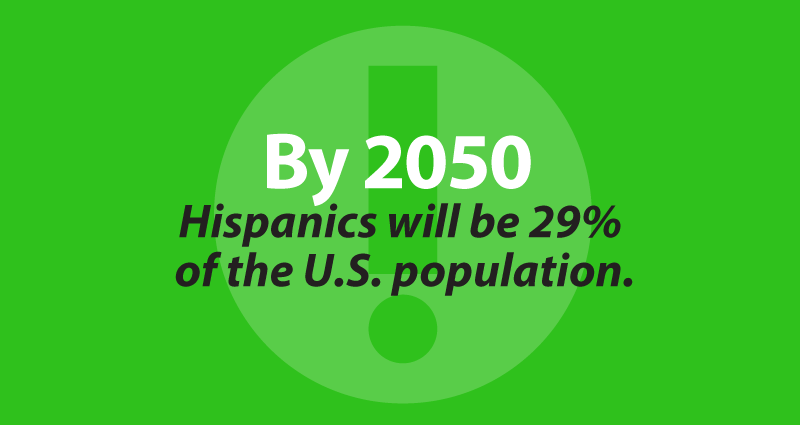
How’s Your Spanish?
Immigration reform may be a hot-button issue right now, but credit unions need to open their doors wider now — assuming they want to stay relevant in the future. According to Pew Research Center, the population of the U.S. will rise from 296 million to 438 million by 2050. Almost all (82% or 117 million)…
Are you a commodity?
Is it any wonder the public does not know there is a difference between credit unions and banks? To the average consumer, financial services are often seen as a necessary evil, or at best, a commodity — something pretty much the same quality no matter where you get it, and sold by such a large…
Your Members Aren’t You
To make an emotional connection with someone, you have to tailor your communication to their wants and needs, not your own. This seems pretty obvious — most people know that they should use simpler language and and talk about “kid stuff” when talking to children, and they probably shouldn’t use swear words around Grandma. But…
Bet on Emotion, Every Time
Credit union members, like all human beings (including the most logical, hard-nosed, by-the-numbers credit union marketers), make almost all decisions solely with their emotions. That’s not to say that rationality has no role at all — being logical or making the logical choice usually feels pretty good, too. Logic and emotion aren’t opposites. “Logic” and…

Something To Hold On To
I’ve always been fascinated by the psychology of money. On the list of emotional minefields, money is right up there with sex and politics, and there are all kinds of baffling taboos and odd behaviors. It can be very interesting to look at some of these behaviors and think about what we might learn from…
Positioning 101
The vast amounts of communication seen daily by each person is staggering. Each year in the U.S., the average person has more than 200,000 advertising messages pushed at them, 30,000 books are published (enough to keep you reading 24 hours a day for 17 years), while 25,000 new trademarks are added. It is said that…